Digging into the 14th Amendment - Birthright Citizenship
What does the 14th Amendment say about birthright citizenship and how was it intended to impact society?
Steven A. Carlson
10 min read
Concerning the 14th Amendment
The 14th Amendment of the United States Constitution includes the now contentious words: "All persons born or naturalized in the United States, and subject to the jurisdiction thereof, are citizens of the United States and of the State wherein they reside." The amendment, ratified in 1868, has been the center of serious debate in recent years - particularly given the influx of perhaps tens of millions of citizens of foreign countries entering the U.S. through unlawful means. Relying on the verbiage: "All persons born or naturalized in the United States...". it is argued that any child born in the United States, with only the rarest of exceptions
exceptions, must automatically be recognized as a U.S. citizen with all the rights and privileges that citizenship holds. The child's citizenship, it is said, must be recognized without respect to the status of the parents - whether legally or illegally present in the country.
Critics insist that the amendment was not intended to extend citizenship to the children of immigrants who have entered the country through unlawful means. It is argued that the people of 1868 could not possibly have foreseen the enormous influx of foreigners that has occurred in the last several decades. With all due respect, for the honest constitutionalist, that is a weak argument since the same claim is made in reverse concerning the 2nd Amendment when it comes to the right to bear arms. Those who would like to curtail the impact of the 2nd Amendment and limit the ownership of firearms maintain that the founders could not have foreseen the advancement in automatic weaponry that currently exists.
The ‘could not have foreseen’ argument suggests that the U.S. Constitution must bend for unforeseen circumstances. However, the amendments to the Constitution are not guidelines that are intended to crumble under the weight of a changing environment. Amendments are designed to establish principles that are foundational to American society’s well-being. Consequently, just as it is important to accept the 2nd Amendment as written without eyeing it through a modified lens, the 14th Amendment must be received as written. So, what is the underlying principle of this amendment? The answer must be drawn from the words as they are written.
Dissecting the 14th Amendment
The first phrase of the amendment points to “All persons born or naturalized in the United States…” That is pretty straightforward language. It is difficult to argue, based on these words, that the principle promulgated in the amendment is not all-encompassing. These words cannot be ignored if the amendment is to receive the respect it deserves. On its face, the phraseology indicates that the principle put forth in the amendment is intended to apply to every individual either born inside the borders of the United States or naturalized as a citizen according to immigration laws. According to this language, birth or naturalization is the qualifier. However, that is not the end of the story.
The 14th Amendment has not one, but two qualifying conditions for citizenship. In full, as stated earlier, citizenship is available and automatic for "All persons born or naturalized in the United States, and subject to the jurisdiction thereof…” Perhaps the most significant word in this part of the amendment is the word “and.” Citizenship is recognized for all persons born or naturalized in the U.S. who are also considered subject to U.S. jurisdiction. It is this second, yet equally important qualifier that brings into question the citizenship status of a person who simply happens to have been born in the country.
What does it mean to be subject to the jurisdiction thereof? That is the question that is the primary source of controversy. Even legal scholars recognize that the phraseology seems a bit ambiguous and it is the varying interpretations of this wording that, to this day, leave the mystery unsettled. Consequently, discovering the answer to that question, if it is possible, should help resolve the controversy.
Those who insist that this amendment applies equally to every child born in the U.S. maintain that, without exception, subject to the jurisdiction thereof speaks to that child being subject to the laws of the land. The claim, which is not completely unreasonable, is that if a person is in the United States, that person is naturally held accountable to, or subject to, the laws of the land. Being subject to U.S. law is then equated with being subject to U.S. jurisdiction. Indeed, there is an argument to be made in favor of this opinion.
It was Senator Jacob M. Howard of Michigan who introduced the citizenship clause in 1866, He emphasized, in the context of the 14th Amendment, it was his understanding that birthright citizenship “will not, of course, include persons born in the United States who are foreigners, aliens, who belong to the families of ambassadors or foreign ministers accredited to the Government of the United States.”[1] The idea was that this language would not apply to foreign diplomats who happen to live within the borders of the U.S. while serving their homeland. The diplomatic immunity enjoyed by foreign diplomats who reside in the U.S. places them, at least to some degree, outside United States authority. Consequently, children born to foreign diplomats inside the United State do not receive automatic citizenship.
The shortcoming in this example is that it fails to fully clarify the meaning of the word jurisdiction within the context of the amendment. The authors could easily have written the plain language, subject to the laws thereof as opposed to the verbiage, subject to the jurisdiction thereof. Since they did not, it is more than reasonable to conclude that they had in view something a bit more involved.
Pre-Civil War Context
The controversy concerning slavery in America began in 1776 with the issuance of the Declaration of Independence as Thomas Jefferson penned the words, “We hold these truths to be self-evident, that all men are created equal…” While many of the signers of that document owned slaves, they were also fully aware of the meaning of these words and that, one day, there would be a reckoning where slavery in America was concerned. While slavery sadly expanded in the U.S. over the next 80 years, some laws were written seeking to, at the very least, slow that growth. This included statutes like The Act Prohibiting Importation of Slaves that took effect on January 1, 1808.
The anxiety over slavery reached a fever pitch with the Dred Scott case (1857). In that court case, a slave by the name of Dred Scot argued for his freedom under the law. In a sad moment for the U.S. Supreme Court, when the ruling came down, Scot lost his bid for freedom. The majority opinion, written by Chief Justice Roger Taney, was written in language that was intended not only as an insult to Dred Scot, but to slaves and blacks generally as Taney revealed what is often considered unrivaled bigotry. In that ruling, Taney wrote:
A free negro of the African race, whose ancestors were brought to this country and sold as slaves, is not a "citizen" within the meaning of the Constitution of the United States.
When the Constitution was adopted, they (slaves) were not regarded in any of the States as members of the community which constituted the State and were not numbered among its "people or citizen." Consequently, the special rights and immunities guaranteed to citizens do not apply to them. And not being "citizens" within the meaning of the Constitution, they are not entitled to sue in that character in a court of the United States, and the Circuit Court has not jurisdiction in such a suit.
Much more could be said about the ruling, but this portion offers a pretty good indication of the tenor of Justice Taney’s words. You are encouraged to study this case and other controversial events to become more familiar with the circumstances that led to the American Civil War of the 1860’s.
Post-Civil War Context
With the war in the rear view mirror, the federal government began what is known as the Reconstruction Period. It was time to rebuild the United States. A major issue for Congress was that there were perhaps 3.5 - 4 million former slaves among them and, according to the ruling in Dred Scot, these slaves were non-citizens. It is this foundational setting upon which the 14th Amendment was penned and ratified.
Until the period of Reconstruction, citizenship was generally determined by the states. An individual who was considered a citizen of a state was naturally considered a citizen of the United States. However, with millions of former slaves in their midst, there would undoubtedly be huge disparities, particularly among southern states, concerning their citizenship. This led Congress to pass the Military Construction Act (1867). This act placed the military in charge of uncooperative southern states. The return of southern state to civilian rule rested on two conditions. First, the voters of each state were required to frame a state constitution addressing black suffrage, guaranteeing black men the right to vote. Second, each southern state was required to ratify the 14th Amendment, guaranteeing citizenship to the entire black community and their descendants.
The 14th Amendment was multifaceted. It ended President Johnson’s power to grant pardons to Confederate leaders – a power Johnson, it is argued, completely abused. Perhaps more importantly, however, the amendment guaranteed citizenship to all Americans, including African Americans. With the description “All persons born or naturalized in the United States,” the amendment established a national standard the southern states could not ignore. The right of the Black community to participate in the voting process was further solidified with the ratification of the 15th Amendment in 1870.
Modern Context
With the context of the 14th Amendment in view, it is time to consider the intended meaning of the term jurisdiction. As this term is considered in historical contexts, scholars generally agree that there are two distinct types of jurisdiction. First, there is what is known as partial or territorial jurisdiction. This is the kind of jurisdiction discussed earlier where a foreign person (tourist, business traveler, etc.), is jurisdictionally subject to the law of the land they enter. For instance, an American citizen traveling in France would naturally, jurisdictionally, be subject to the laws of France.
However, there is also something known as complete jurisdiction. Where U.S. birthright citizenship is concerned, it requires total allegiance to the U.S., owing no allegiance to any other nation or territory. It is, according to a host of scholars and historians, complete jurisdiction that is in view in the context of the 14th Amendment. This interpretation has also been supported in assorted court cases such as the Slaughterhouse cases of 1872 and Elk v Wilkins in 1884. The timing of those cases fell close enough to the origination of the amendment that they fully understood and applied the term as it was intended.
Many like to turn to the case of the U.S. v Wong Kim Ark (1898) as evidence that children born of illegal immigrants should rightfully be considered U.S. citizens. Without getting too deep into the details of the case, suffice it to say that there is no legitimate comparison between that case and the arguments concerning the children of illegal immigrants. Wong was the son of Chinese citizens living in the U.S. as legal residents. Wong, having traveled out of the country, had his citizenship and re-entry challenged when he returned. Wong won his case and his citizenship. However, a case where a man was born of parents who were legally in the country has no bearing on the arguments being made concerning those born to illegal immigrants.
Legal scholars such as Professor John Eastman have posited that the language of the Amendment allows for a more restrictive interpretation. They argue that citizenship should not be automatically conferred upon birth in the U.S. if the parents are not citizens or legal residents. This interpretation suggests that the original context of the Amendment intended to rectify the injustices faced by African Americans following the Civil War, rather than establish an unrestricted right to citizenship for all those born on American soil.
Contemporary cases in the U.S. courts have echoed these sentiments. Recent rulings have examined how birthright citizenship aligns with other statutes and international law concerning immigration and nationality. Challenges to birthright citizenship have also included views from constitutional theorists who argue that the practice undermines the rule of law, as it could incentivize illegal immigration and result in the dilution of civic responsibility. Moreover, critics highlight issues arising from dual citizenship and national security concerns, where the lack of an immigration framework may lead to consequences that threaten the social fabric of the nation.
President Trump’s Executive Order
In 2025, President Trump issued an executive order denying birthright citizenship to the children of illegal immigrants. The order has been challenged and is now before the Supreme Court. The issuance of this order and the character of the Supreme Court case raise serious questions. The most obvious question is: How will the Supreme Court rule on the case? Will they find Trump’s order constitutional or will the court come down on the side of the challengers? If the justices rely on constitutional principles and the correct understanding of the 14th Amendment, they will find in Trump’s favor.
There are times when this Supreme Court is difficult to gage, and this is one of those times. It is expected that Justices Clarence Thomas and Sam Alito will find the order constitutional. These two tend to be strict constructionists where rulings are concerned. It is also reasonable to believe that the three liberal justices, Sonia Sotomayor, Elena Kagan, and Ketanji Brown Jackson will seek to rule that the order is unconstitutional, which is the undisputed political position of those on the left. This leaves four justices in question.
Justice John Roberts, the Chief Justice, has a history of inconsistency where the U.S. Constitution is concerned. At times he has fully embraced and upheld the meaning of the Constitution. However, there have been times when he would not let the Constitution stand in the way of his favored ruling. For instance, he found Obamacare to be unconstitutional (2010), so he deliberately altered the wording of the statute (changing the word penalty to tax) so that it could be declared constitutional. In this case, it would be surprising if he ended up supporting Donald Trump’s executive order.
This leaves Justices Neil Gorsuch, Brett Kavanaugh, and Amy Coney Barrett. It seems likely that these three will find Trump’s executive order constitutional. However, constitutionally speaking, Amy Coney Barret’s findings have been a bit wobbly. On this one, she is probably 50/50. That being the case, given the fact that Trump cannot afford to lose even one of these three, if Barrett bails, the executive order will be nullified. Then again, Roberts and Barrett could surprise everyone and find in favor of the order, as they should.
The other issue concerning Trump’s order is that it is an executive order and executive orders can be reversed by an ensuing president. However, this one seems slightly different since the Court is being asked to apply a specific definition to a clause in the 14th Amendment. Assuming another president attempted to reverse this executive order and the reversal was challenged, it is difficult to see the Court unraveling the court-determined definition of that clause. Still, it would be responsible of Congress to draft and pass a statute that defines and applies the clause as intended. This would prevent any attempt at reversing Trump’s order in the future.
[1] Federation for Immigration Reform, Birthright-Citizenship-Fact-Sheet.pdf, accessed January 25, 2026.
You Can Be A Pillar -
Just Click The Image Below


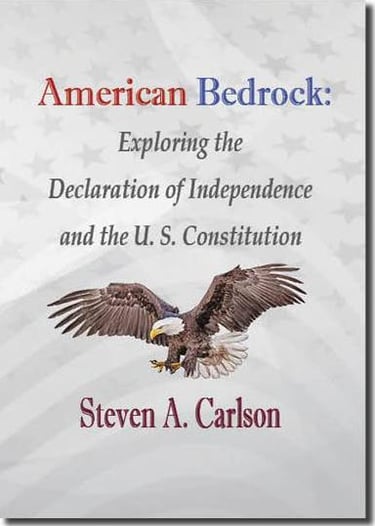
This book will truly enhance your understanding of the Declaration of Independence and the United States Constitution. Click the button below to check it out.
___________________________________________________________________________________________________________________________________________________________________________________________________
Contact
Questions? Reach out anytime.
Email:
contact@constitutionmatters.net
© 2025. All rights reserved.