Federal Limitations and States' Rights - Part 4
What the Founders really thought...
Steven A. Carlson
5 min read
Debates Among the Founding Fathers
Fundamental Disagreement
Most Americans know very little about the details of the founding of this nation. They know George Washington was the first president and are undoubtedly familiar with names like Thomas Jefferson, Benjamin Franklin, Alexander Hamilton, and others who were key players in the separation from England and the establishment of a new nation. Still, the details are mostly lost to present-day Americans. Consequently, this essay may prove to be a disappointment for some as they discover that their political views may not align with someone they consider a hero.
John Adams, who served as the second president of the U.S., deserves much credit for his role in convincing the colonies of the wisdom of separating from England. In 1765, eleven years before the writing of the Declaration of Independence, John Adams penned A Dissertation on the Canon and Feudal Law. This document was a brutal indictment of tyrannical governments like that of Great Britain that had so mistreated citizenry throughout history. His keen insights, it may rightfully be said, helped lead the people of America to seek their independence.
After the separation from England, the representatives of the people determined to establish a structural foundation upon which this nation could begin to develop. As such, they set out to draft a U.S. Constitution. However, this would prove no easy task since stark differences would surface during the framing of that document. Those differences were most visible when it came to discussing the role of the federal government.
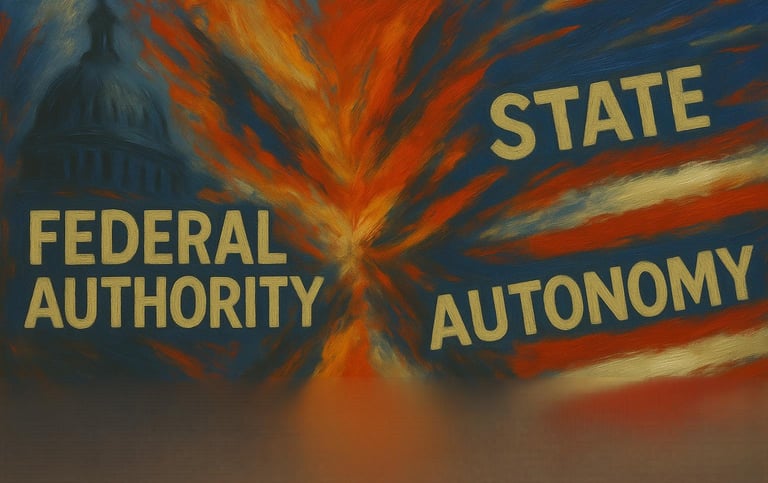
As the nation was in its embryotic stage, not everyone was on the same page when deciding exactly what this new nation would look like politically. The era was marked by intense debates and differing visions among its architects, particularly regarding the structure and powers of the federal government. Central to these discussions were two opposing factions that crystallized around key figures: the Federalists, led by Alexander Hamilton and supported by John Adams, and the Anti-Federalists, represented by Thomas Jefferson, James Madison, and Patrick Henry. This essay aims to elucidate the foundational disagreements between these camps, examining their contrasting views on governance and their implications for the emerging Republic.
While Federalists were strong proponents of the separation from England, states’ rights and individual freedoms were not high on their list of priorities. Federalists wanted a federal government that was equal in strength to the tyrannical government of George III that they had just escaped. Acquiescing power to the states and focusing on the peoples’ rights would result in what they saw as a weak federal government. Such a government, they believed, would have difficulty surviving in a world of sharks. Anti-Federalists, on the other hand, held states’ autonomy and individual freedoms as their building blocks.
The ideological gap between these two groups grew ever wider during George Washington’s presidency. By the end of his second term, these factions had developed into full-fledged political parties. In the end, the wording of the Constitution considerably limited the power of the federal government, but not enough to dissuade the Federalists. The courts, displaying Federalist tendencies, looked for weaknesses in the wording that could be construed, ever so creatively, to allow the government a foot in the door in areas “not delegated to the United States by the Constitution…” (10th Amendment). Consequently, the federal government has, with the assistance of the judiciary, wormed its way well beyond the role depicted in the Constitution that was revealed in Part 3 of this series.
Some like to turn to what is called the General Welfare Clause of the Constitution (Article I, Section 8, Clause 1) as reasoning for the federal government’s extra-constitutional excursions. In fact, the reference is not even to a clause in the Constitution, but to two words (general welfare) inside a clause where specific federal permissions are in view. The clause speaks, not about federal government expansion, but about how the revenues from taxation should be used for the general welfare of the nation. Nothing in the clause remotely suggests allowance for the federal government to exceed the limitations of the Constitution.
Perhaps the most important original constitutional statement regarding the federal government exceeding constitutional limits is found in Article I, Section 8 clause 18, which reads as follows:
To make all Laws which shall be necessary and proper for carrying into Execution the foregoing Powers, and all other Powers vested by this Constitution in the Government of the United States, or in any Department or Officer thereof.
The federal government, and particularly congress, is here tasked with making laws necessary for carrying out the foregoing powers. In other words, they should establish laws to do the work of the government, the parameters of which are set in place in the document. What can be said about the phrase all other Powers. This is where the 10th Amendment comes into play. Those other powers must be powers specifically “delegated to the United States (government) by the Constitution.” Indeed, certain additional powers are designated to the federal government in the ensuing Articles. However, this clause specifically confines all other Powers to those enumerated within the four walls of the Constitution itself (See Part 3 of this series).
The federal government has certainly crossed the line of limitations set by the Constitution. This begs the question: How has that worked out? In the twenty-first century, the federal government consists of roughly 400 departments and just short of 3 million employees, many of whom are working in areas “not delegated to the United States by the Constitution…”(10th Amendment). This does not include the thousands of NGO’s (Non-Government Organizations) and independent contractors who make their living off of federal taxes. This expansion of the federal government has been complemented by a nearly $40 trillion federal debt.
While there are undoubtedly some good people who work in the federal government, the problem that arises with federal expansion is that every role the government takes on is eventually politicized. Law enforcement, taxation, etc., always end up as tools (weapons) that are used for political purposes. Perhaps an example will help provide greater perspective where federal overreach and political weaponry is concerned. Please return for the conclusion of this five-part series where federal control of the U.S. banking system will be considered as an example of federal overreach. Perhaps that discussion will help provide answers to the question: How has that worked out?
See below for contact information
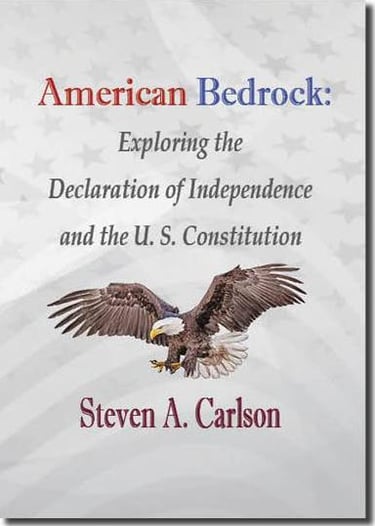
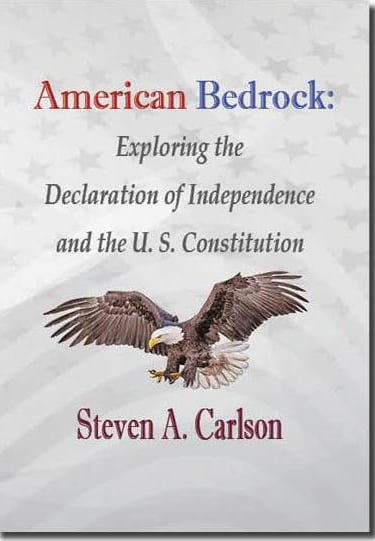
This book will truly enhance your understanding of the Declaration of Independence and the United States Constitution. Click the button below to check it out.
___________________________________________________________________________________________________________________________________________________________________________________________________


Contact
Questions? Reach out anytime.
Email:
contact@constitutionmatters.net
© 2025. All rights reserved.