Federal Limitations and State's Rights - Part 5
Federal Control of the U.S. Banking System
Steven A. Carlson
5 min read
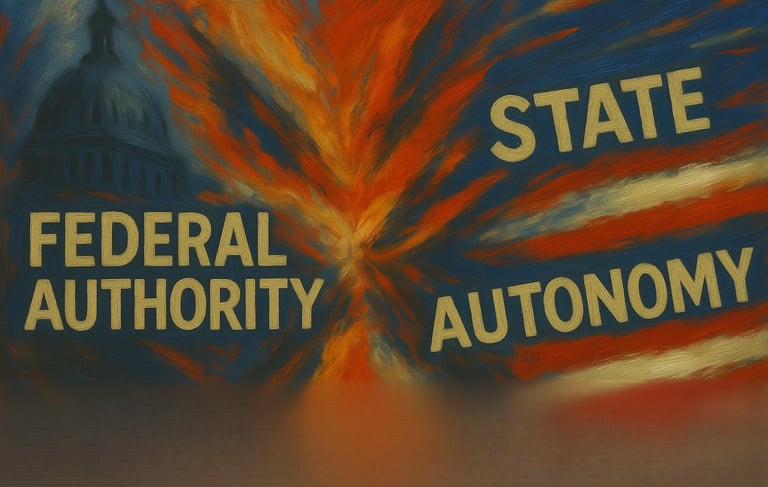
Federal Takeover of the U.S. Banking System
Early Advocacy for a National Bank
In the early years of the United States, Alexander Hamilton, a Federalist, emerged as a formidable proponent of a national bank, believing it was essential for the country’s financial stability and economic growth. As the first Secretary of the Treasury, Hamilton believed that a strong and centralized banking system would provide a more stable national currency, facilitate government transactions, and enhance the country’s overall credit. His vision for a national bank was driven by the emerging realities of a promising economy that required a reliable financial infrastructure.
Hamilton’s advocacy was not merely about the establishment of a national bank; it was a fundamental element of his broader economic strategy, which aimed to foster a federal government far more robust than that designed in the Constitution. He sought a federal government capable of managing and stimulating national interests. By creating a national bank, he hoped to engender a level of trust in the American economy which, he believed, was marred by uncertainty and a lack of uniformity in money systems among the states.
Hamilton faced fierce opposition from Anti-Federalists such as Thomas Jefferson. Jefferson championed a decentralized approach to governance. He argued against the formation of a national bank, insisting that it concentrated too much power in the hands of the federal government. He believed that such a concentration threatened the very democratic principles upon which the nation was founded. The ensuing debate underscored a philosophical divide regarding the role of the federal government in economic affairs and raised questions about the constitutional limits of federal power, since establishing a national bank fell outside the scope of federal powers authorized by the Constitution.
The tension between the advocates of a strong central bank and supporters of a decentralized banking system became a defining feature of early American politics. This conflict laid the groundwork for future financial and political institutions in the United States, revealing the complexities of governance and the interpretation of constitutional authority in economic matters.
The courts eventually ruled in favor of Hamilton and the Federalists. Through highly problematic legal reasoning, the Supreme Court determined that Hamilton could move forward and establish a national bank. This decision was handed down despite the fact that the establishment of a national bank by the federal government was a power “not delegated to the United States by the Constitution…” (10th Amendment).
Eventually and Inevitably...The Federal Reserve
Once the court opened the door to federal control of banking, expansion of that role seemed inevitable. The establishment of the Federal Reserve System in 1913 marks a pivotal moment in American history, representing an even greater shift in the role of the federal government, particularly where monetary policy is concerned. What brought about the establishment of the Fed? Through the 19th century, the United States grappled with a number of financial panics (yes, they were called panics back then) that suggested a measure of fragility in the U.S. banking system (despite the promised stability provided by a national bank). These recurrent crises were seen by some as evidence of weakness in the existing financial infrastructure suggesting the need for reform.
In the late 18th century, following the Revolutionary War, but prior to and during the ratification of the Constitution, the United States experienced two panics (as they were then called). There were two more panics following the ratification of the Constitution. In this economic landscape, Hamilton and Congress chose to establish a national bank (1791) to hopefully settle this economic rollercoaster.
During the 19th century, the U.S. economy was plagued with (as close as can be determined) sixteen recessions, four depressions, and four panics. With the turn of the century, and prior to the establishment of the Fed in 1913, the U.S. saw two recessions and two panics over the course of roughly eleven years. Between the years 1913 and 2000, the U.S. saw another fifteen recessions and two depressions including the Great Depression (1929-1933). In the first twenty years of the 21st century, another three recessions have hit the United States.
Was the establishment of the Federal Reserve, or even the initial founding of a national bank, worth the cost of the federal government exceeding its constitutional authority? No one can really know if it would have been a less rocky road economically without these institutions. Certainly recessions and depressions are not the only measure that could be employed to determine their impact, but getting into those various measures would be overwhelming for this space. Still, it is not unreasonable, given these numbers, to question the value of the federal government stepping over the Constitution simply because the courts will allow it.
What is true is that those in charge of monetary policy in the United States are, for all practical purposes, unanswerable to the people of the United States (the Federal Reserve is considered independent). However, the Constitution is clear that the federal government must be answerable to the people. The Constitution does not leave room for independent agencies tasked with making monumental decisions on behalf of the citizenry.
Additionally, as is generally true when the federal government gets involved, the Federal Reserve has been employed as a political weapon. The claim is that being independent, the Federal Reserve exists outside the political arena. However, when it comes to the federal government, everything is now political and control of interest rates can serve as a potent weapon against a political foe or, conversely, a benefit to a political ally.
Few would disagree with the position that the federal government has exploded into an out-of-control monstrosity, extending its reach far beyond constitutional limits. It is difficult to argue otherwise since Scot Bessant, the current Secretary of the Treasury, suggested that perhaps 10% of the federal budget is absconded through the fraudulent activity of miscreants. This is what happens when government fails to stay in its lane. If the federal government remained faithful to its constitutional role, this would minimize fraudulent opportunities, and the nation would not be $40 trillion in debt. That’s what Thomas Jefferson and James Madison understood a quarter of a millennium ago. In fact, it may be that even Alexander Hamilton and John Adams might be embarrassed were they around today to see the fruit of their labor.
See below for contact information
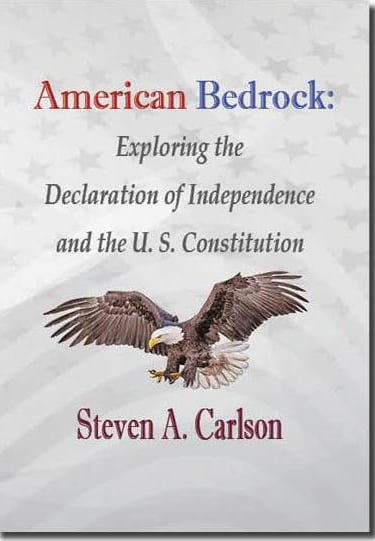
This book will truly enhance your understanding of the Declaration of Independence and the United States Constitution. Click the button below to check it out.
___________________________________________________________________________________________________________________________________________________________________________________________________


Contact
Questions? Reach out anytime.
Email:
contact@constitutionmatters.net
© 2025. All rights reserved.