
Anti-Federalist No. 7
Warning of Civil War
Steven A. Carlson
6 min read
The time in which the constitution or government of a nation undergoes any particular change, is always interesting and critical. Enemies are vigilant, allies are in suspense, friends hesitating between hope and fear; and all men are in eager expectation to see what such a change may produce. But the state of our affairs at present, is of such moment, as even to arouse the dead ... [A certain defender of the Constitution has stated that objections to it] are more calculated to alarm the fears of the people than to answer any valuable end. Was that the case, as it is not, will any man in his sober senses say, that the least infringement or appearance of infringement on our liberty - that liberty which has lately cost so much blood and treasure, together with anxious days and sleepless nights - ought not both to rouse our fears and awaken our jealousy?[1]
The authors of the Anti-Federalist Papers viewed the constitution through a completely different lens than did the authors of the Federalist Papers. Here PHILANTHROPOS sees it as leading to authoritarianism/tyranny. To him, and to other members of the resistance, a world under this constitution would be better compared to a prison where the people would become subject to a central government rather than living as a free people. No doubt the people would experience the after-effects of a bitter pill. Indeed, this constitution is something he might better wish on his enemies.
Tyranny, once it takes hold, cannot be easily undone and a federal government with the power of the constitution to support it, would have too firm a grip. In particular, there was concern about the federal government’s ability to borrow money - laying the burden of that debt on the people. Similarly, Congress would be able to name its own compensation and draw a paycheck from the federal government rather than from the states they supposedly represented. Surely this was a dangerous proposal.
The Revolutionary War had ended roughly four years earlier (1783). Consequently, for the past four years, the union had held together (rather satisfactorily in the eyes of the Anti-Federalists) under the Articles of Confederation. To these men, there was no need for this new constitution. The Articles of Confederation had seen them through a bloody war and met the needs of the nation in what might be considered the worst of times. There was no need to establish an entirely new government. The Articles, with perhaps a few tweaks, could provide the federal government all the tools necessary for it to function as a facilitator for a nation of independent states.
The new constitution in its present form is calculated to produce despotism, thraldom and confusion, and if the United States do swallow it, they will find it a bolus, that will create convulsions to their utmost extremities. Were they mine enemies, the worst imprecation I could devise would be, may they adopt it. For tyranny, where it has been chained (as for a few years past) is always more cursed, and sticks its teeth in deeper than before. Were Col. [George] Mason's objections obviated, the improvement would be very considerable, though even then, not so complete as might be. The Congress's having power without control - to borrow money on the credit of the United States; their having power to appoint their own salaries, and their being paid out of the treasury of the United States, thereby, in some measure, rendering them independent of the individual states; their being judges of the qualification and election of their own members, by which means they can get men to suit any purpose; together with Col. Mason's wise and judicious objections - are grievances, the very idea of which is enough to make every honest citizen exclaim in the language of Cato, 0 Liberty, 0 my country![2]
Beware my countrymen! Our enemies- -uncontrolled as they are in their ambitious schemes, fretted with losses, and perplexed with disappointments-will exert their whole power and policy to increase and continue our confusion. And while we are destroying one another, they will be repairing their losses, and ruining our trade. Of all the plagues that infest a nation, a civil war is the worst. Famine is severe, pestilence is dreadful; but in these, though men die, they die in peace. The father expires without the guilt of the son; and the son, if he survives, enjoys the inheritance of his father. Cities may be thinned, but they neither plundered nor burnt. But when a civil war is kindled, there is then forth no security of property nor protection from any law. Life and fortune become precarious. And all that is dear to men is at the discretion of profligate soldiery, doubly licentious on such an occasion. Cities are exhausted by heavy contributions, or sacked because they cannot answer exorbitant demand.[4]
Our present constitution, with a few additional powers to Congress, seems better calculated to preserve the rights and defend the liberties of our citizens, than the one proposed, without proper amendments. Let us therefore, for once, show our judgment and solidity by continuing it, and prove the opinion to be erroneous, that levity and fickleness are not only the foibles of our tempers, but the reigning principles in these states. There are men amongst us, of such dissatisfied tempers, that place them in Heaven, they would find something to blame; and so restless and self- sufficient, that they must be eternally reforming the state. But the misfortune is, they always leave affairs worse than they find them. A change of government is at all times dangerous, but at present may be fatal, without the utmost caution, just after emerging out of a tedious and expensive war. Feeble in our nature, and complicated in our form, we are little able to bear the rough Posting of civil dissensions which are likely to ensue. Even now, discontent and opposition distract our councils. Division and despondency affect our people. Is it then a time to alter our government, that government which even now totters on its foundation, and will, without tender care, produce ruin by its fall?[3]
Now comes the gravest of warnings. PHILANTHROPOS foresees the potential of a civil war that may well accompany ratification of the constitution. It’s not that he was threatening war. He simply believed it would be the inevitable outcome. Why? He believed by placing such unbridled authority in the hands of a few men, the temptation would be too great – the power would be abused.
To PHILANTHROPOS, the cost of war would be much too high a price to pay. Indeed, no one could be called a winner. Deaths would seize families and fortunes would be lost. Under this proposed constitution, power would turn to lust for more power. Neighbor would plot against neighbor, and the nation would surely be lost.
Countries are eaten up by the parties they favor, and ravaged by the one they oppose. Fathers and sons, sheath their swords in anothers bowels in the field, and their wives and daughters are exposed to rudeness and lust of ruffians at home. And when the sword has decided quarrel, the scene is closed with banishments, forfeitures, and barbarous executions that entail distress on children then unborn. May Heaven avert the dreadful catastrophe! In the most limited governments, what wranglings, animosities, factions, partiality, and all other evils that tend to embroil a nation and weaken a state, are constantly practised by legislators. What then may we expect if the new constitution be adopted as it now stands? The great will struggle for power, honor and wealth; the poor become a prey to avarice, insolence and oppression. And while some are studying to supplant their neighbors, and others striving to keep their stations, one villain will wink at the oppression of another, the people be fleeced, and the public business neglected. From despotism and tyranny, good Lord, deliver us.[5]
________________________
[1] Anti-Federalist No. 7
[2] Ibid
[3] Ibid
[4] Ibid
[5] Ibid
Insights – Antifederalist No. 7 ADOPTION OF THE CONSTITUTION WILL LEAD TO CIVIL WAR "PHILANTHROPOS," (an anonymous Virginia Antifederalist) appeared in The Virginia Journal and Alexandria Advertiser, December 6, 1787, writing his version of history under the proposed new Constitution.
History is replete with regime changes. Wars and revolutions have been fought. Nations have been conquered. Governments have been replaced. Indeed, the people of the United States had just fought their own war for freedom. Now that the war was over, it was time to consider the future and the changes that would be necessary to prepare for a post-war America. In fact, the proposed constitution represented a change in governance from what the colonists had known.
As the new nation developed and the form of government took shape, some individuals would be elated while others would be disappointed. In these excerpts from Anti-Federalist No. 7, PHILANTHROPOS, the anonymous author, considers the impact of the newly proposed constitution on individual freedoms and the federal/state relationships in the United States of America.
------------------------------------------------------------------------------If you enjoyed this article, please encourage your friends to visit us here at constitutionmatters.net where the Constitution really does matter. Also, if you appreciate the articles and insights provided here, feel free to contribute to the cause by clicking below.
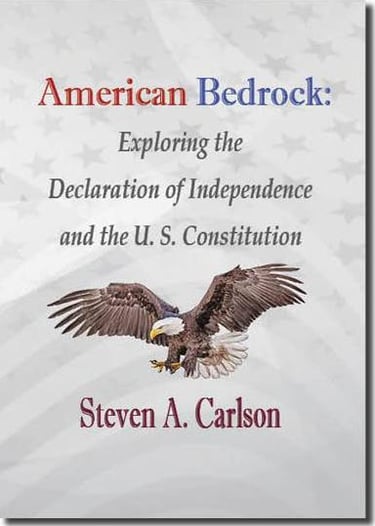
This book will truly enhance your understanding of the Declaration of Independence and the United States Constitution. Click the button below to check it out.
______________________________________________________________________________________________________________________________________________________________________________
Feel free to visit restoretheword.com
Contact
Questions? Reach out anytime.
Email:
contact@constitutionmatters.net
© 2025. All rights reserved.