Reconciling Immigration and the U. S. Constitution - Part 2
Addressing Illegal Immigration
Steven A. Carlson
6 min read
Consequences of Illegal Immigration in the U. S.
The influx of countless illegal immigrants (those who have employed unlawful means to enter the United States) over the past few years has had some truly disturbing repercussions. For instance, according to DHS, between 448,000 and 469,000 unaccompanied, undocumented children entered the country. Estimates are that between tens-of-thousands, and up to 300,000, of these children were not properly tracked by HHS. Sadly, many were placed with un-vetted sponsors who were neither their parents nor legal guardians. This left many children vulnerable to exploitation by ne’er-do-wells for sex trafficking, child labor abuses, and other nefarious activities.
Where criminal activity by illegal immigrants is concerned, there was a dramatic spike in 2021-2025. According to U. S. Customs and Boarder Protection, during the years 2017-2020 the average conviction rate of illegal immigrants for assorted felonies like assault, burglary, drug trafficking, illegal weapons trafficking, homicide/manslaughter, sexual offenses, etc., was 1,152/year. During the period between 2021 and 2025, the number of convictions of illegal immigrants for those same crimes averaged 2,861/year. This, of course, does not include the number of crimes committed by illegal immigrants who were not ultimately arrested. However, at the very least, it seems a reasonable conclusion that the increase was due to an open-border policy.
The immigration landscape in the United States has become increasingly complex, characterized by a significant tension between federal and state policies. This conflict often arises as states attempt to assert their authority over immigration enforcement and regulations, creating a patchwork of laws that can differ widely from one state to another. A prominent example of this tension can be observed in Arizona’s Senate Bill 1070, enacted in 2010, which aimed to empower local law enforcement to address immigration issues. This law sparked extensive legal battles and was successfully challenged as unconstitutional, emphasizing the limitations of state power in immigration enforcement when it contradicts federal law.
California's sanctuary laws showcase a different approach, prioritizing the protection of illegal immigrants within its borders. These laws limit cooperation between state and local law enforcement and federal immigration officials, reflecting a broader trend in progressive states to resist federal immigration policies deemed unjust by the state’s political machine. State and federal laws concerning immigration often conflict, raising questions about scope of authority, as illustrated by various Supreme Court rulings which have, in keeping with the U. S. Constitution, rightfully supported federal supremacy in immigration matters.
Looking to the future, the dynamic between federal and state immigration policies is likely to continue to develop with some states complementing and other states combatting federal policy. As legislative responses to immigration challenges vary significantly across states, the implications remain profound. Legal complexities and individual state initiatives will continue to influence the overarching narrative of U.S. immigration. Understanding this tension is important for one to grasp the broader picture of immigration policy and its effects on the nation.
Physical Conflict in Enforcement of Immigration Laws
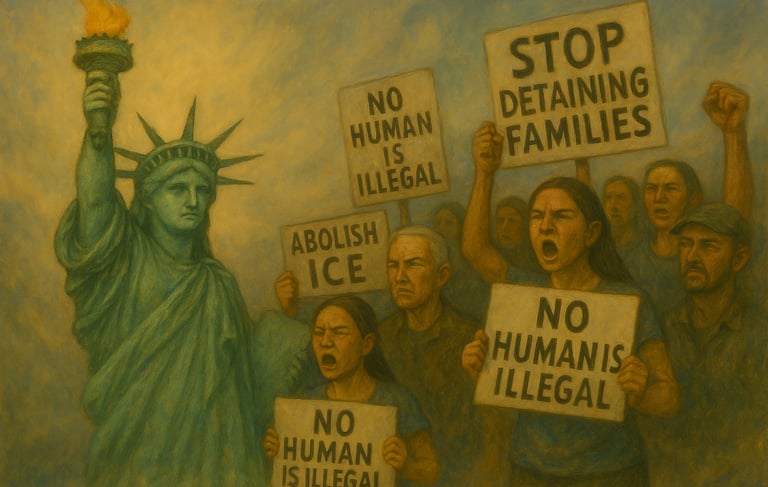
Many state and local politicians have sought to impede the federal government’s attempts to enforce federal immigration laws. For instance, certain governors and mayors have refused to allow their own law enforcement agencies to cooperate with federal agencies when it comes to deportations of those who are unlawfully in the United States. It is curious that they would seek to protect these individuals, particularly since the feds are attempting, first and foremost, to capture those who have committed violent crimes in the United States. It is difficult to understand why anyone would seek to protect violent criminals. One can only assume that their choices are politically motivated since they are generally individuals who openly oppose Donald Trump’s presidency. This suggests that they are more concerned about making a political statement than they are concerned about the safety and well-being of their constituents.
The antagonistic actions of state and local officials have had a disturbing effect on individual citizens who oppose federal deportation of illegal immigrants. Emboldened by the words and actions of their political leaders, many have gotten involved in physical attacks on federal officers when they enter certain jurisdictions. Many citizens, and undoubtedly many individuals who are in the country illegally, have employed rudimentary weapons like bricks and glass bottles, throwing them at the feds to dissuade them. Hundreds of these agitators have been arrested, and some have even been injured or killed as a result.
These demonstrations raise certain questions. The conflicts are generally depicted as local residents who are simply coming out of their homes to protect their territory. However, the events seem far more organized and deliberate than an impromptu gathering of neighbors. Indeed, we discover that, to a large degree, many, if not most or all of the demonstrators are part of a well-organized machine, traveling from location to location in an attempt to make a violent statement about the deportations. We know this because pictures from events in various locations reveal many of the same actors.
The fact that so many individuals travel with what appears to be a planned attempt to disrupt the enforcement of federal immigration laws suggests that these events are not only not spontaneous, but they are likely organized, at the very least, at a multi-state level. It also stands to reason that these people are not doing this on their own dime. Consequently, many are likely paid disrupters carrying out the bidding of those who pay the bills. This makes these encounters, at the very least, disingenuous, and at the worst, conspiratorial. After all, there are no coincidences.
Conclusion
The goal of these essays on modern-day immigration in America is two-fold. First, and most important, is the educational goal. It is important to understand what the U.S. Constitution has to say on the subject and who, in the American political arena, has jurisdiction where immigration is concerned. That authority lies unequivocally with the federal government. Individual states can write statues concerning the treatment of immigrants living there, but those statutes hold no sway over federal authority where immigration is concerned.
As states attempt to assert their interests, the tension between local governance and federal authority remains a pivotal aspect of the immigration debate in the United States. Understanding this complex landscape is crucial for individuals, lawmakers, and advocacy groups alike, as it informs policy decisions and societal discussions surrounding immigration reform.
The impact of illegal immigration on the coffers of the U. S. Treasury and individual states has been overwhelming. Billions upon billions upon billions of dollars have been spent with little if any benefit realized. It seems time now for state and local officials to reconsider their positions and their actions. They must realize 1) that policy and the well-being of our nation must take precedent over politics and 2) the Constitution rightfully places responsibility for the issuance and enforcement of immigration policy squarely in the hands of the federal government. It is now time to allow the feds to do their job without politically motivated interference.
End Part 2

Policy v Politics
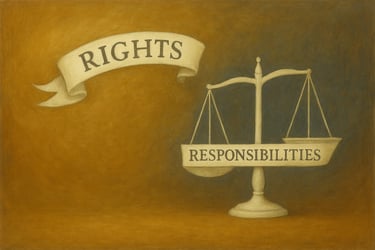
Free Speech - Rights and Responsibilities

Navigating the Second Amendment
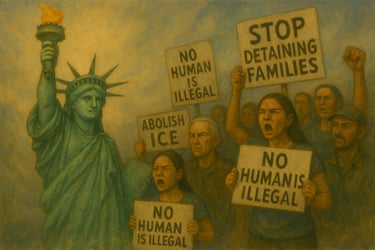
Reconciling Immigration and the U.S. Constitution - Part 1

To see a list of all commentaries, click the above picture.
See below for contact information
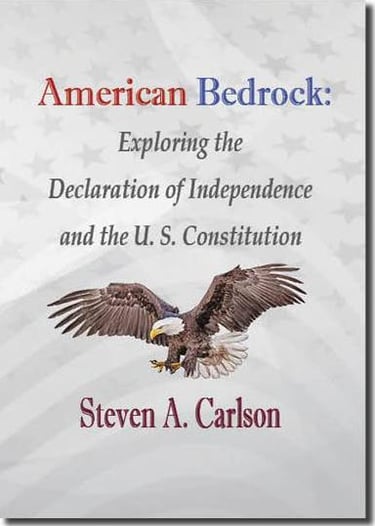
This book will truly enhance your understanding of the Declaration of Independence and the United States Constitution. Click the button below to check it out.
___________________________________________________________________________________________________________________________________________________________________________________________________


Contact
Questions? Reach out anytime.
Email:
contact@constitutionmatters.net
© 2025. All rights reserved.