Navigating the 2nd Amendment
Twenty-first Century Application of an Eighteenth Century Principle
Steven A. Carlson
8 min read
Proof of Citizenship and the American Voter
Yes, Congress Can Write Election Laws
To see a list of all commentaries, click the above picture.


Can Men Get Pregnant? - Part 1
Is it Nationalism or Is It Patriotism?
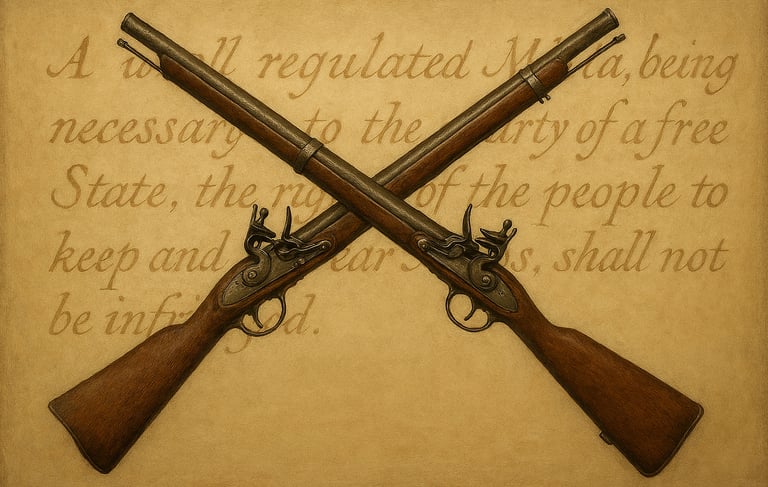
About the Second Amendment
The Second Amendment of the United States Constitution has been a cornerstone of American liberties since its ratification in 1791. Originally, it was intended to ensure that citizens had the right to bear arms in the context of a state militia. However, over the past two centuries there has been considerable debate, accompanied by mounds of legislative action, concerning the ownership of firearms among the American citizenry. Abundant controversy exists despite the seeming straightforward character of the plain wording that, “A well-regulated Militia, being necessary to the security of a free State, the right of the people to keep and bear Arms shall not be infringed.”
The opposing positions concerning this amendment are profound. When the Second Amendment was drafted, the primary concern was the formation of state militias to defend against tyranny and foreign threats. The framers of the Constitution had witnessed the struggles of a young nation, where accessing armaments was critical to its defense. At that time, weapons were more rudimentary, and the idea of personal ownership was heavily linked to collective security. Fast forward to the twenty-first century and the landscape of firearms and the societal context in which they exist has vastly changed. Modern advances in technology have transformed firearms into sophisticated weapons, arguably leading to new challenges in the implementation of the Second Amendment.
Those who seek to limit, as much as possible, an individual’s right to own firearms tend to focus on the “free State” clause of the amendment, arguing that the original and primary goal was to protect a state’s right to establish and operate militia as a matter of self-defense. The modern claim is that the federal military and state National Guard units are now sufficient that the formation of militia units is no longer necessary. Consequently, to these individuals, the right of an individual “to keep and bear Arms” is no longer relevant. Additionally, given the technological development in armaments over the past two centuries, it is argued that society is actually less safe with such advanced weaponry in the hands of individual citizens. It has also been reasoned that, while the amendment limits federal intrusion where gun ownership is concerned, the “free State” clause may offer the opportunity for individual states to regulate ownership since the purpose of the amendment was to protect ownership in a state-run militia.
Those who favor strict application of this amendment, which would prevent government from any infringement upon an individual’s right to own weapons of any kind or in any amount, emphasize the “right of the people to keep and bear arms” clause. To them, any attempt by the government to restrict ownership would violate the U. S. Constitution. By defending the “individual rights” thesis emphasized in this clause, individuals would be protected in the ownership, possession, and transportation of firearms.
Today, the question arises: how does the Second Amendment apply in an era of mass shootings, what is perceived as increased gun violence, and complex public safety concerns? It is said that the militia-based intent of the amendment does not adequately address the realities of contemporary society where private ownership of weapons, including automatic firearms, raises significant ethical and legal challenges.
Some modern interpreters of this amendment argue that the right to bear arms must be weighed against the government's duty to protect its citizens. In that light, there have been many attempts at legislative actions at both the state and federal levels aimed at regulating firearms, forcing and expanding background checks, and placing limitations on certain types of weapons. Thus, the Second Amendment is being reexamined in light of growing public demand for safety regulations, a situation that the framers, it is argued, could hardly have envisioned.
It is also true that societal attitudes toward firearms have shifted to a large degree, with an increasing number of Americans advocating for more stringent controls despite the unambiguous wording of the amendment. Many have reasoned that the historical need for militias has dissipated, negating the reason for individual ownership. Still, the amendment says what it says in plain English. The right to bear arms was not regarded as a state right, but an individual right that coincidently served to fill a basic state need – the forming of state militia when necessary. Consequently, the tug-of-war between the right to bear arms and what many see as a public safety concern continues to influence legal battles and political discourse across the nation. A host of claims are made about the original intent of the Second Amendment, but those arguments often ignore what the framers had to say on the subject.
One of the primary early discussions concerning federal authority surrounded the need, or lack thereof, of a standing military force in times of peace. Concerns were raised that a federal military force could be seen as a threat to the independence of the states. Similar to the declarations in other states, the Pennsylvania Declaration of Rights (1776) addressed those concerns, stating:
That the people have a right to bear arms for the defence of themselves and the state; and as standing armies in the time of peace are dangerous to liberty, they ought not to be kept up; And that the military should be kept under strict subordination to, and governed by, the civil power.[1]
In Federalist 29, James Madison wrote extensively on the subject of whether the federal government or the individual states should oversee a militia responsible for the protection of the entire union. The proposal was that the militia should be run by the federal government, but that control might be shared with the states by placing in the hands of the states the responsibility of appointing officers to the military. His position came to this: 1) a federal military is necessary in order for the United States to be well prepared in the case of insurrection or invasion; 2) the states would have no reason to fear a federal military that consisted of their brothers, neighbors, etc., especially when officers could be appointed by the states; and 3) each state could still raise its own militia to prepare against unwarranted federal intrusion. Consider the following words from Madison.
The attention of the government ought particularly to be directed to the formation of a select corps of moderate extent, upon such principles as will really fit them for service in case of need. By thus circumscribing the plan, it will be possible to have an excellent body of well-trained militia, ready to take the field whenever the defense of the State shall require it. This will not only lessen the call for military establishments, but if circumstances should at any time oblige the government to form an army of any magnitude that army can never be formidable to the liberties of the people while there is a large body of citizens, little, if at all, inferior to them in discipline and the use of arms, who stand ready to defend their own rights and those of their fellowcitizens… Where in the name of common-sense, are our fears to end if we may not trust our sons, our brothers, our neighbors, our fellow-citizens? What shadow of danger can there be from men who are daily mingling with the rest of their countrymen and who participate with them in the same feelings, sentiments, habits and interests? What reasonable cause of apprehension can be inferred from a power in the Union to prescribe regulations for the militia, and to command its services when necessary, while the particular States are to have the sole and exclusive appointment of the officers?[2]
While Madison did not specifically address the question of individual gun ownership, it is because the denial of ownership at the time would have been unheard of. The U. S. had just fought a revolution that was won, to a large degree, because individuals owned weapons. If this was to be a nation of freedoms where individuals must be able to defend themselves, the notion that gun ownership should be limited would have been thought ludicrous.
Perhaps no one stated more eloquently the views of the founders with respect to gun ownership that George Washington who, in what could be considered in modern terms the first State of the Union Address: remarked:
A free people ought not only to be armed, but disciplined; to which end a uniform and well-digested plan is requisite; and their safety and interest require that they should promote such manufactories as tend to render them independent of others for essential, particularly military, supplies.”[3]
Two primary rights serve as protection for all other individual rights. The first is freedom of speech as depicted in the First Amendment. The second is the right to keep and bear arms, which recognizes each individual’s right to self-defense as well as defense of neighbors, community, state, and nation. The founders saw the right to keep and bear arms as a natural concept.
Admittedly, certain limits have necessarily evolved with the onslaught of advanced weaponry. For instance, a weapon of mass destruction (nuclear, etc.) has no place in an individual’s personal arsenal. That is not something someone would bear as they might a pistol or rifle, so exclusion from the principles of the Second Amendment is reasonable. The founders probably didn’t envision the possibility that their words would allow for a cannon (which a man could not throw ver his shoulder) in the front yard of every settler. Still, it is not unreasonable to believe that advanced weaponry that can be carried personally by an individual would be covered by the words of this amendment.
It is sad that our nation and other nations have seen exploitation of this right with mass killings and other abuses. With freedom comes responsibility, and there are those who do not handle responsibility well. Still, it is important to focus on the reasoning behind the Second Amendment, and that reasoning still applies in the twenty-first century. There will be more to come on this topic as we take the opportunity to consider statutes and court cases with respect to the Second Amendment, so please stay tuned.
________________________
[1] Pa. Declaration of Rights § XIII (1776), in 5 The Federal and State Constitutions, Colonial Charters, and Other Organic Laws 3083 (Francis N. Thorpe ed., 1909).
[2] Madison, James, Federalist No. 29
[3] Founders Online, From George Washington to the United States Senate and House of Representatives, https://founders.archives.gov/documents/Washington/ 05-04-02-0361, accessed January 11,2026.
See below for contact information
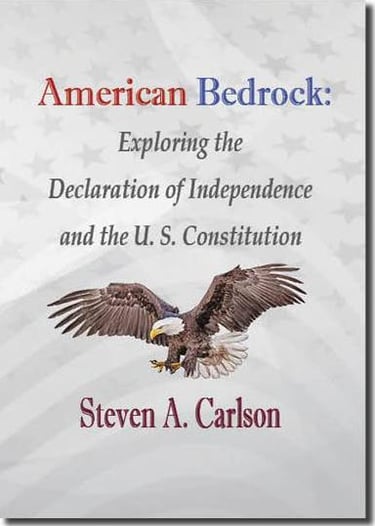
This book will truly enhance your understanding of the Declaration of Independence and the United States Constitution. Click the button below to check it out.
___________________________________________________________________________________________________________________________________________________________________________________________________


Contact
Questions? Reach out anytime.
Email:
contact@constitutionmatters.net
© 2025. All rights reserved.