Separation of Church and State - Part 2
Considering the communique between the Danbury Baptist Association and Thomas Jefferson
Steven A. Carlson
6 min read
To see a list of all commentaries, click the above picture.
Proof of Citizenship and the American Voter
Yes, Congress Can Write Election Laws
Was America Built on the Back of Slavery? Yes and No - Part 2
Separation of Church and State - Part 1
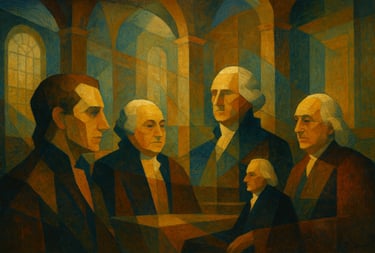
Thomas Jefferson’s Response to the Danbury Baptist Association
On January 1, 1802, President Thomas Jefferson responded to the Danbury Baptist Association, addressing the concerns articulated in their earlier letter that appeared in Part 1. Jefferson’s letter would go down in history as an inspired explanation of the relationship between the church and the State in the newly formed United States of America. In this correspondence, Jefferson articulated his belief in the magnitude of the subject of religious freedom in America. He reassured the association that the government should not interfere in matters of faith, thereby setting a precedent for future church-state relations. Below is his response.
GENTLEMAN,
The affectionate sentiments of esteem and approbation which you are so good as to express towards me, on behalf of the Danbury Baptist Association, give me the highest satisfaction. My duties dictate a faithful and zealous pursuit of the interests of my constituents, and in proportion as they are persuaded of my fidelity to those duties, the discharge of them becomes more and more pleasing.
Believing with you that religion is a matter which lies solely between man and his God, that he owes account to none other for his faith or his worship, that the legislative powers of government reach actions only, and not opinions, I contemplate with sovereign reverence that act of the whole American people which declared that their legislature should "make no law respecting an establishment of religion, or prohibiting the free exercise thereof," thus building a wall of separation between church and State. Adhering to this expression of the supreme will of the nation in behalf of the rights of conscience, I shall see with sincere satisfaction the progress of those sentiments which tend to restore to man all his natural rights, convinced he has no natural right in opposition to his social duties.
I reciprocate your kind prayers for the protection and blessing of the common Father and Creator of man, and tender you for yourselves and your religious association, assurances of my high respect and esteem.
Thomas Jefferson,
January 1, 1802
A Critical Misapprehension
Some people have, either intentionally or mistakenly, misconstrued the lesson from Thomas Jefferson’s letter to the Danbury Baptist Association. The query from the association concerned governmental influence on religion and religious practices in America. They wanted assurances that America was not like England where the government was intertwined with certain denominations, and that is the concern the president addressed in his response.
Sadly, some have turned the give-and-take between Thomas Jefferson and the Baptists on its ear. With his words, “a wall of separation,” Jefferson was offering assurance that the church was independent and need not worry about government overreach into the religious arena. From those words, however, they have reframed the phrase to simply read “separation of church and State” while ignoring the surrounding context. This wording has then been used to make the political argument that the “wall of separation” to which the president referred works both ways. In other words, not only is the government prohibited from influencing religion, but the opposite is also true. The claim is that Jefferson was saying the church is equally precluded from having any influence on the U.S. government – a subject Jefferson did not address.
The church consists of people and in America most of those individuals are U.S. citizens. As such, they have standing to impress upon the government their political views. Additionally, nothing in the U.S. Constitution bars the church as an entity from voicing those views on behalf of its members, much the same way that the Danbury Baptist Association approached Thomas Jefferson. Consequently, the phrase “wall of separation between church and State” does not preclude the church from involving itself in government affairs.
Jefferson's analogy of a wall was intended to provide assurance that, while the government exists alongside religious institutions, the First Amendment provided a protective barrier shielding the church from governmental interference. This statement has had profound implications, as it underscored the principle that individuals have the right to practice their faith without government intervention.
The words from Jefferson’s letter have gone down in history as far more than mere political rhetoric. His response embodies a critical understanding of what the Founders intended with respect to religious freedom in America. He made it clear that the federal government was constitutionally prohibited from dictating or influencing religious practices, either on its own or vicariously through the support of individual denominations. That is simply not the role of the government in the United States. His response marked a pivotal moment in the development of American constitutional elucidation regarding the First Amendment.
Long-term Implications
The correspondence between the Danbury Baptist Association and President Thomas Jefferson addressed a critical philosophical matter in the history of religious freedom in America. When the Danbury Baptists reached out to Jefferson in 1801, they voiced concerns about the potential encroachment of government on religious practices. Jefferson's assurance, delivered through his now-famous letter, emphasizing a "wall of separation between church and State," not only addressed their fears but also shaped the foundational understanding of religious liberty in the United States.
This exchange significantly influenced legal perspectives concerning the First Amendment. Jefferson's articulation of the “wall of separation between church and State” has been repeatedly cited in judicial opinions, helping to frame the American legal landscape. Over the centuries, this principle has evolved, playing a crucial role in landmark Supreme Court cases that define the boundaries of religious rights and government involvement in religion. This includes cases such as Kennedy v. Bremerton School District which found in favor of a high school teacher/coach who was fired for praying publicly on the field after games; Lemon v. Kurtzman concerning the use of taxpayer dollars to fund religious schools; and Burwell v Hobby Lobby, Inc., which held that closely held corporations can be exempted from regulations that violated the owners’ religious beliefs. This last case is curious. Why would the government knowingly pass any law that so clearly conflicts with religious beliefs and then seek to force compliance upon those of faith? It smacks of government stepping over the First Amendment, which was the ultimate finding of the Supreme Court. Nonetheless, in each case, the court leaned heavily on the explanation that stems from Jefferson's words, reinforcing the notion that the State should remain neutral in religious matters.
Certain First Amendment questions are not so easily answered. For instance, should prayer be allowed in public school? There is an argument to be made that denying personal religious practices even in a government-related setting might be considered a violation of the First Amendment. This was the ruling in Kennedy v Bremerton School District. Of course, prayer could not be forced upon those who do not wish to participate, but it has been argued that parents ought to have primary say where local schools, for which they pay their taxes, are involved. These kinds of issues continue to rise even in light of Jefferson’s wisdom.
In today's political and social climate, the exchange between the Danbury Baptists and Jefferson serves as a reminder of the importance of religious freedom and religious independence in America. It also serves as an example of the church addressing political issues when it seems appropriate. As discussions about the “wall of separation” continue to surface, understanding these historical precedents remains essential for ensuring that the rights of all citizens, including people of faith, are upheld.
End Part 2
See below for contact information
This book will truly enhance your understanding of the Declaration of Independence and the United States Constitution. Click the button below to check it out.
___________________________________________________________________________________________________________________________________________________________________________________________________


Contact
Questions? Reach out anytime.
Email:
contact@constitutionmatters.net
© 2025. All rights reserved.