Proof of Citizenship and the American Voter
A deep dive into the need for proof of citizenship
Steven A. Carlson
9 min read
Was America Built on the Back of Slavery? Yes and No - Part 1
Was America Built on the Back of Slavery? Yes and No - Part 2
To see a list of all commentaries, click the above picture.
Is it Nationalism or Patriotism?
Yes, Congress Can Write Election Laws
Citizenship in the United States of America
In the earliest days of the United States, citizenship was loosely defined and even treated as an arbitrary matter prior to the ratification of the Constitution. For instance, immigrants who had fought on the side of the colonies in the Revolutionary War were generally considered citizens along with those who, in some fashion, had shown their allegiance to the United States. Prior to the Constitution, a person’s citizenship, or lack thereof, was decided at the state level and was often determined in the courts. This lack of a uniform standard created significant discrepancies across different states, which led to a variety of interpretations on what citizenship truly meant and who qualified for it.
In the days following ratification of the Constitution, the idea of citizenship at both the state and federal levels was widely discussed among lawmakers and citizens alike. Citizenship was important since the Constitution recognized certain rights, privileges, and protections afforded the citizenry at each level. People were eager to understand how these new definitions would affect their lives and their connection to the burgeoning nation. The existence of these rights, privileges, and protections underscored the significance of what it meant to be a citizen in the young republic. The Constitution had placed upon Congress the responsibility for developing a process for naturalization (Article I, Section 8, Clause 4). This responsibility was pivotal in establishing a clear path for immigrants seeking to join the union and participate fully in the political process.
Where U.S. citizenship is concerned, there are certain benefits that are considered rights and others that are deemed privileges. A right is an inherent entitlement, protected by law or directly by the Constitution, that cannot be denied. These are fundamental claims every person possesses as a human or citizen. For instance, freedom of speech and the right to a fair trial are understood to be rights.
A privilege, on the other hand, is something that is granted, but can also be revoked or denied in certain circumstances. It is an advantage or benefit that is earned or granted or subject to certain conditions. For instance, a driver’s license requires meeting criteria and can be taken away when one breaks the rules or no longer meets those criteria. Many consider voting in American elections as a fundamental right of every U.S. citizen. Interestingly, the Constitution does not explicitly name voting among a person’s rights, although it is often equated to a right. However, historically, it has also been treated as a privilege that U.S. citizens share. For instance, after the Civil War, Congress passed legislation ensuring that certain characteristics such as race, could not be used to prevent someone from voting. Yet certain states did establish other criteria to determine a person's eligibility. Still, whether treated as a right or a privilege, voting is an instrument whose use is strictly limited to the U.S. citizenry. Indeed, citizenship is the one incontrovertible criterion that must be met by those who wish to participate in U.S. elections.
There have been a multitude of claims over the past few decades that non-citizens have voted in U.S. elections. Some contend the issue is widespread while others insist that proof of such misuse is extremely rare. Records and estimates range from several hundred to tens of thousands or more of non-citizens wrongly voting in American elections. Regardless of the size of the problem, even a small matter left unaddressed will undoubtedly grow. The question is not whether this issue should be managed, but how it should be managed.
One suggestion that has surfaced in Congress is the proposal that nationwide each person who seeks to register to vote should be required to provide proof of U.S. citizenship. This plan has been tendered in the S.A.V.E. Act, which recently passed in the U.S. House of Representatives. It is soundly argued that this would minimize the risk of non-citizens registering to vote and, as a result, make election results more secure and trustworthy.
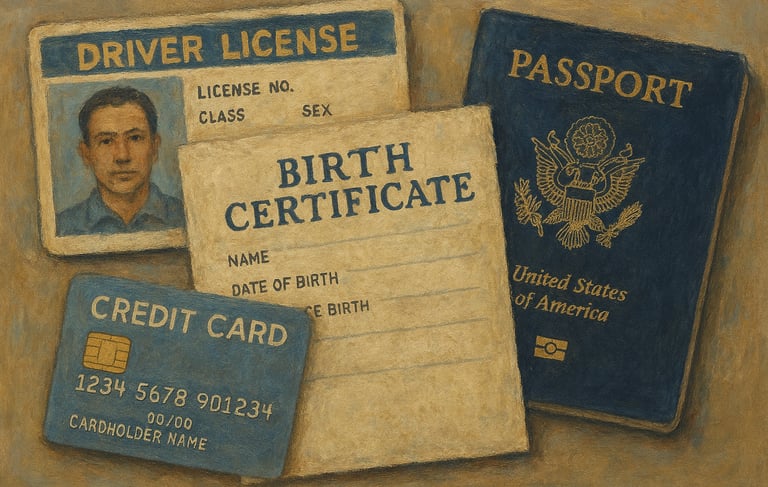
An additional proposal meant to better protect the election process would oblige each state to verify the identity of individuals who arrive at the polls to vote by requiring each person to present a photo ID (driver’s license, etc.). In fact, a large number of states have already implemented voter ID laws. However, state laws regarding voter ID standards vary significantly across the country. Some states implement strict requirements, necessitating specific forms of photo identification, while others allow a range of documentation.
Opposing Proof of Citizenship and Voter ID
Requiring proof of citizenship from those who seek to register to vote has surprisingly emerged as a contentious matter. A number of arguments have been raised on both sides of the issue. For instance, critics of this plan raise concerns that these policies would disproportionately impact certain communities, potentially marginalizing legitimate voters. They insist that rigid identification laws may make it more difficult for certain individuals to access their legitimate opportunity to participate in elections. Specifically, they identify certain ethnic minorities (Blacks, Latinos, etc.) as those who are most impacted. The not-so-subtle implication is that these groups lack the wherewithal to obtain the necessary documentation.
Another criticism is one of logistics. Implementing proof of citizenship mandates, it is argued, could present substantial challenges for state and local election officials. The claim is that many jurisdictions lack the necessary infrastructure to effectively manage this kind of documentation with respect to voter registration. This could result in longer processing times or even errors that might mistakenly disqualify eligible citizens. Such logistical hurdles not only complicate the registration process but also place undue strain on election officials, who must balance these challenges alongside their regular responsibilities.
Opponents also point out that the actual incidence of voter fraud in the United States is exceedingly low. Research, it is said, indicates that the likelihood of impersonation fraud at the polls is minimal, suggesting that the stringent requirements for proof of citizenship would fail to provide substantive benefits. Consequently, the potential risks posed of disenfranchising legitimate voters outweigh the benefits of safeguarding electoral integrity that proof of citizenship might provide. In other words, mandatory proof of citizenship may inadvertently contribute to social inequalities while doing little to enhance the security of the electoral process.
As with the proof of citizenship requirement, a voter ID requirement for those who arrive to cast a ballot has been met with considerable opposition on the grounds that it might again disenfranchise certain groups of voters. The argument is that not every citizen possesses a government-issued photo ID. This is especially true of low-income individuals and minorities who would purportedly be disproportionately impacted. Mandatory ID laws, it is said, could create barriers for these populations, ultimately lowering voter turnout and diminishing the overall election process. The implications are that such laws may well deprive eligible citizens of the constitutional principle of equal access to voting.
Favoring Proof of Citizenship and Voter ID
Advocates argue that proof of citizenship would safeguard against voter fraud and ensure voter eligibility. It is reasoned that verifiable proof of citizenship, which may include IDs like birth certificates or naturalization certificates, would serve to reinforce the system by preserving its legitimacy.
Furthermore, requiring proof of citizenship would help to fortify the principle that only eligible individuals could participate in elections. This requisite aims to restrict voting to only those who have a legal right to influence national policy, thereby enhancing the validity of election outcomes. Supporters assert that by restricting voting access to U.S. citizens, the electoral framework can be more reliable and secure.
Another key argument in favor of this measure is the increase in public confidence in election results. When citizens believe that measures are in place to verify voters' eligibility, they are more likely to trust the electoral process. This trust is crucial for a vibrant nation, as it encourages civic engagement and participation among the populace. States that have enacted these laws, such as Arizona and Kansas, have reported positive feedback from their constituents, who feel reassured about the accountability of the electoral system.
Overall, advocates for proof of citizenship maintain that such regulations, when applied thoughtfully, contribute positively to the electoral landscape, promoting a fair and transparent process that ensures eligible citizens can voice their opinions with votes undiluted by ineligible participants.
Proponents of picture ID laws argue that these measures enhance the security of the electoral process and help prevent voter impersonation. They assert that having a photo ID ensures that only eligible voters can access the polls, potentially reducing instances of fraud and maintaining the integrity of elections.
Conclusion
In truth, the arguments offered by those who oppose both proof of citizenship and voter ID rules lack substance. First, a number of states have already successfully implemented these measures without facing major logistical challenges. Second, while the claim is made that voter fraud is rare, no one has suggested that it does not exist. Left unchecked, more and more will take advantage. After all, how many more banks would be robbed if banks suddenly remained unlocked at the end of the day? Finally, the insistence that certain less privileged groups (minorities) may lose their ability to vote seems an affront to those groups. These individuals are no doubt equally capable of handling their own paperwork in modern society.
What makes these arguments even more disingenuous is that the ID’s in question are already required in almost every facet of American society. In fact, one cannot interact with government (federal, state, or local) without providing legitimate identification. Whether it is opening a bank account, obtaining a credit card, renting an apartment, buying a car, or getting a job, proof of identification is required. The notion that the cherished privilege of voting in U.S. elections should be the single exception to the rule suggests that it is not noble, but nefarious motives at play.
Polls are generally not the best or most accurate tools and they certainly are not the basis for making decisions about the future of the country. However, it is notable that proposals like proof of citizenship and voter ID laws have proven to be extremely popular among the electorate with well over 80% of the citizenry favoring these steps. In fact, even among those groups who are ostensibly at greatest risk of being marginalized, the vast majority favor implementation of these measures. While polls can be deceiving, the numbers weigh too heavily in favor of these proposals to be misleading. This can only mean that these individuals are more concerned about honest elections than the little effort it takes to present proof of citizenship or picture ID.
The debate over the necessity of proof of citizenship and picture ID when voting remains contentious. The need for election security measured against the importance of accessibility for all eligible voters remains an issue. That balance, it seems, might be better managed if the U.S. had a standard set of regulations across the entire nation. This would minimize disenfranchisement since, regardless of one’s location the rules would be the same.
In fact, laws already exist that deny voting to those who are not citizens of the U.S. Consequently, adding the tools of proof of citizenship and voter ID is not a matter of altering laws that already exist. Instead, these requirements would serve primarily as a defense mechanism providing support for the enforcement of current statutes, thus minimizing the need for after-the-fact legal remedies. In other words, this would provide an ounce of prevention as opposed to the need for a pound of cure.

Navigating the Second Amendment
Birthright Citizenship - Digging into the Fourteenth Amendment



What About Greenland?
Policy v Politics
Socialism v Fascism
Free Speech - Rights and Responsibilities
Reconciling Immigration and the U.S. Constitution - Part 2
Reconciling Immigration and the U.S. Constitution - Part 1
See below for contact information
This book will truly enhance your understanding of the Declaration of Independence and the United States Constitution. Click the button below to check it out.
___________________________________________________________________________________________________________________________________________________________________________________________________


Contact
Questions? Reach out anytime.
Email:
contact@constitutionmatters.net
© 2025. All rights reserved.