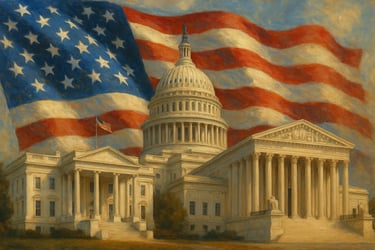
Is It Nationalism or Patriotism?
Distinguishing between nationalism and national loyalty.
Steven A. Carlson
5 min read
Reconciling Immigration and the U/S. Constitution - Part 1
Reconciling Immigration and the U/S. Constitution - Part 2


To see a list of all commentaries, click the above picture.
Proof of Citizenship and the American Voter
Yes, Congress Can Write Election Laws
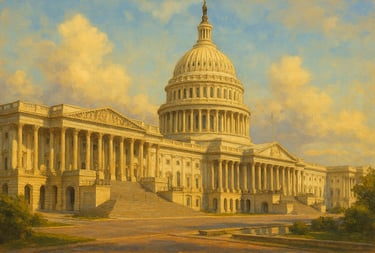
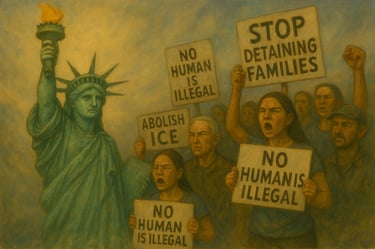
Nationalism v Patriotism
The concept of nationalism has been on the lips of many lately. In the U.S., those on the left side of the political aisle often boldly accuse many on the right of being nationalists. It begs the question: What is nationalism? Some will say that nationalism is that diabolical political ideology where an individual or group places a nation’s well-being above all else. It is often characterized by a strong identification with their nation, emphasizing sovereignty, national identity, and self-determination.
Key characteristics of nationalism include a shared identity, a unified purpose, and the promotion of national values. It encourages a sense of unity among citizens, leading to collective action in support of national interests. On the surface, these principles sound quite positive. After all, who would not want a unified citizenry with shared values? However, the term nationalist has been turned into a pejorative term. Nationalism, it is said, it not so much about having a unified citizenry and having shared values. It is about forcing the nationalist’s ideals and values upon those who take exception. Consequently, it involves mixing a strong national identity and a sense of shared values with a high dose of political power, which must be gained in order to control outcomes in favor of the nation. Thus, nationalism, it is argued, equates to authoritarianism.
Nationalism, as defined above, can have a monumental impact on international relations. It can foster a measure of distrust and shape the behavior of nations regarding their foreign policy decision-making, alliances, and responses to conflicts. Hence, it can create divisions, leading to isolationism or hostility towards perceived threats from other nations. For example, during the First World War, the rise of nationalist sentiments contributed to heightened tensions and ultimately conflict among European powers.
Generally speaking, in America, those who so casually employ the term nationalist disparagingly do so with their own agenda in view, and it is an agenda that does not favor a unified America, but seeks division at the nation’s cost. There are those in the U.S. for whom a united citizenry with shared values is problematic because the well-being of the United States is not their priority. It is what could be designated a globalist movement that seeks a world order without borders and complete dissolution of individual national interests. It is an ideology where a world order might replace, or forcefully influence relations between individual national governments.
It seems, however, that most who are accused of being nationalists in America are not nationalists at all. It seems the better way to describe them is that they are patriots. That is to say, they are loyal to a nation whose values they cherish and they want the best for that nation. There is no plan or desire to force others to believe as they believe, specifically because they embrace independent thought and free speech - the very principles upon which the nation was built. They do, however, seek to persuade (not force) their political adversaries to see things their way.
At its core, patriotism evokes feelings of pride and a desire to contribute positively to the nation’s well-being. It is often demonstrated through acts of civic participation and patriotic activities that serve to promote national unity. Such participation reflects a proactive stance, demonstrating an individual’s readiness to uphold the values and well-being of their nation. These can range from celebrating national holidays and participating in cultural traditions to advocating for policies that enhance the country’s image and interests on a global stage. Patriotism often manifests itself as a commitment to defend the nation, whether through military service or active support of governmental initiatives aimed at national security.
Patriotism also plays out well on the international stage. Indeed, one would expect every nation to be represented by patriots whose goal in dealing with other nations is to arrive at agreements that bode well for their own country. If every government sought the best for their nation in good faith negotiations, no one would get everything they want, but each would get some of what they hope for and the result would be a measure of harmony. Consequently, patriotism would lend itself to a greater measure of international cooperation.
These patriots, however, do have a certain perspective when it comes to the shape of their society. First, they want the best for the nation and the individual citizens of the nation. Indeed, a patriot would expect nothing less from those who choose to live here. Second, patriots recognize that the U.S. is a nation of laws. After all, laws serve as guardrails helping the citizenry to live together in harmony. Consequently, they take strong exception to those who disrespect and even seek to thwart those laws. Such disruption can only harm the nation, especially when lawlessness becomes the norm for large organized groups within that society. Finally, respect for others – both person and property – is at the heart of the American ideal. If a person cannot or does not value these American principles, they will likely not be happy in this country and they will make others miserable with their presence.
What many call American nationalism (the dark side) is not nationalism at all – nor is it an ideology that favors authoritarianism. Instead, it is patriotism. It is people who believe in a republic built on democratic principles. It is a people who believe in the U.S. Constitution and the rule of law. It is a people who want what is best for their nation and, for those who care not for this nation, patriots would not be disappointed if they would simply step aside (or leave) and allow patriots to love their nation and live in peace.


Navigating the Second Amendment
Birthright Citizenship - Digging into the Fourteenth Amendment


What About Greenland?
Policy v Politics
Socialism v Fascism

Free Speech - Rights and Responsibilities
The 2020 Election...By the Numbers
Proof of Citizenship and the American Voter
See below for contact information
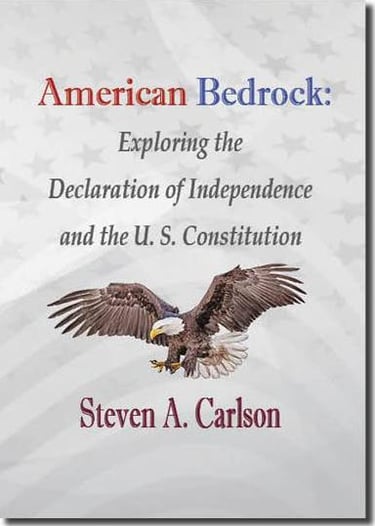
This book will truly enhance your understanding of the Declaration of Independence and the United States Constitution. Click the button below to check it out.
___________________________________________________________________________________________________________________________________________________________________________________________________


Contact
Questions? Reach out anytime.
Email:
contact@constitutionmatters.net
© 2025. All rights reserved.