DJ Trivia and the Problematic Preamble
How a night at DJ Trivia opened my eyes
Steven A. Carlson
13 min read
To see a list of all commentaries, click the above picture.
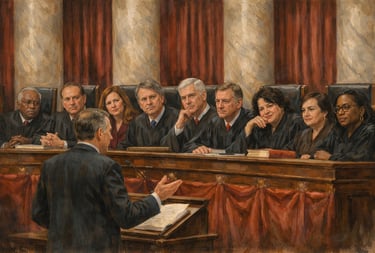
Birthright Citizenship and a Typhlotic Courtroom - Lesson 3: The Reconstruction Era
Birthright Citizenship and a Typhlotic Courtroom - Lesson 4: Wong Kim Ark
Birthright Citizenship and a Typhlotic Courtroom - Lesson 5: 20th Century U.S. Citizenship
Birthright Citizenship and a Typhlotic Courtroom - Lesson 6: Oral Arguments
An Eye-opening Experience
I enjoy playing DJ Trivia. Perhaps many of you have heard of it and some of you may play from time to time or even regularly. DJ Trivia is a phenomenon that is taking hold across America. It involves going to a restaurant or pub and answering trivia questions asked by the DJ. The questions cover the gambit including questions about entertainment, sports, politics, geography, and pretty much any other topic you can imagine. The game involves four rounds of five questions with the level of difficulty and the points awarded increasing with each round. There are usually a dozen or more teams that show up to compete and many of the questions can be challenging.
Personally, I am on a team that plays twice each week, although not every team member plays both nights. Still, the team is well-rounded including a psychologist, three retired teachers, one of whom taught high school science for decades, a real estate agent, people who are or have been involved in the fields of medicine and food, etc. Consequently, it could be argued that we win more than our share of games throughout the season.
There are a couple of terms that are commonly used in DJ Trivia. For instance, the term drink of shame applies when all but one team correctly answers a question. There is also what is known as a social. A social occurs when every team present gets the answer to a particular question correct. This usually happens a few times during a game. Some nights it might happen only a couple of times while other nights it may occur perhaps a half dozen times.
When you get to the final question of the night, that question is referred to as a Do-Or-Die-Dare. Your options are 1) get the answer right and you will double your total score, 2) get the answer wrong and you lose all your points for the night, or 3) don’t answer the question and keep the points you have earned so far. Needless to say, much rests on the ability to answer that question correctly.
Given the title of this article – DJ Trivia and the Problematic Preamble – you may be asking yourself what DJ Trivia has to do with the Preamble to the U.S. Constitution. Well, I recently experienced something very disheartening as we were playing trivia a few weeks ago. We were doing well for the evening. In fact, we may well have held the lead going into the Do-Or-Die-Dare, so we waited in anticipation for that final question. Then, as the question showed on the screen, as I recall, the first words out of my mouth were: “Well, this will be a social.”
What showed on the screen that night was not a question, per se. It was actually a statement with one word omitted and the team was expected to fill in the blank. Here’s what appeared on the screen.
------------------------------------------------------------------------------If you enjoyed this article, please encourage your friends to visit us here at constitutionmatters.net where the Constitution really does matter. Also, if you appreciate the articles and insights provided here, feel free to contribute to the cause by clicking below.
We the People of the United States, in Order to form a more perfect Union, establish Justice, insure domestic Tranquility, provide for the common defence, promote the general Welfare, and secure the ________________ of Liberty to ourselves and our Posterity, do ordain and establish this Constitution for the United States of America.
Of course, this is the Preamble to the U.S. Constitution, which explains why I was confident that every team would have at least one member who would know the answer. However, to my surprise, the captain of our team handed the answer sheet to me, which indicated that I was expected to write down the answer, which was “Blessings.” At the same time most of our team, almost in unison, stated that they did not know the answer and were surprised that I thought it would be a social. One other person on the team knew the answer, perhaps because we spend considerable time together or because she read my book - American Bedrock: Exploring the Declaration of Independence and the U.S. Constitution - or perhaps because she is a retired schoolteacher, but I was shocked that no one else seemed to know the answer.
While I expressed some disappointment that others on the team were unfamiliar with the words of the Preamble, imagine my disbelief when the final scores for the night were displayed on the screen. Of course, we won the game, so the team was elated. However, what caught me off guard is that no other team in the room answered the question correctly. That means that out of the dozens of Americans sitting in that room, only I and a close friend knew the words of the Preamble to the U.S. Constitution. In fact, when the answer to the fill-in-the-blank was displayed on the screen, someone from another team flippantly remarked, “Well, that’s stupid.”
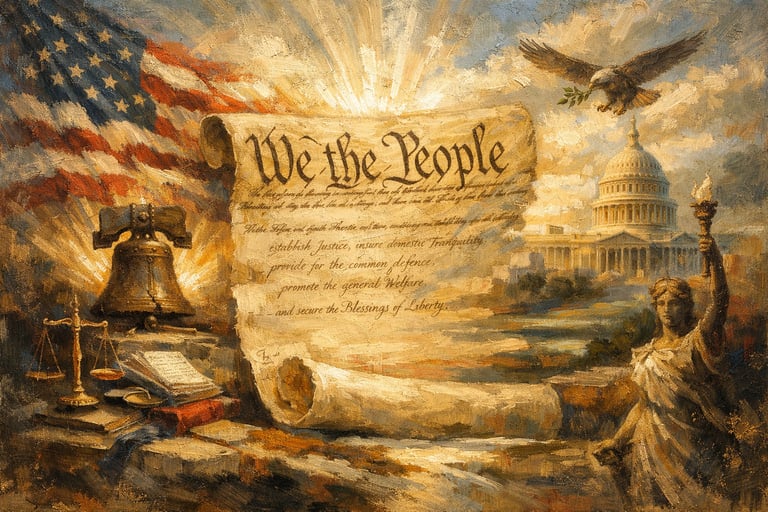
That night at DJ Trivia caused me to realize how little the average American knows about the U.S. Constitution and it is that night at DJ Trivia that has led to this article. While it seems critical for attorneys and judges to be cognizant of the content of the entire Constitution, it seems that it is a relatively low bar to expect citizens of this country to know and understand the Preamble. Consequently, this is a lesson on the words of the Preamble as well as the importance of those words when it comes to understanding the rest of the founding document of the United States of America.
The objectives of the U.S. Constitution are laid out in the Preamble, which sets the tone for the rest of the document. While it doesn’t spell out the exact form of government or list in detail the rights of the people, it clearly conveys the aim of creating a limited government that safeguards a free society. For reference, here’s the full text of the Preamble:
We the People of the United States, in Order to form a more perfect Union, establish Justice, insure domestic Tranquility, provide for the common defence, promote the general Welfare, and secure the Blessings of Liberty to ourselves and our Posterity, do ordain and establish this Constitution for the United States of America.
We the People
Arguably the most consequential words in the U.S. Constitution, “We the People” embody the principle of collective ownership and governance. In contrast to the numerous tyrannies and oligarchies that have existed throughout history, this nation was conceived to be owned and directed by the will of its citizens. Instead of adhering to a hierarchical, top-down system of rule, the United States was designed to operate under a bottom-up structure, empowering the people as the ultimate source of authority.
The experiment in bottom-up governance was clearly demonstrated in 1787 and 1788, as multiple debates unfolded across various states, with some factions strongly opposing the adoption of the Constitution. Over the course of a year, The Federalist Papers were published in public newspapers to persuade the populace, presenting compelling arguments in favor of ratification. Ultimately, without the consent of the governed, the Constitution could not exist. In the end, “We the People” rendered their decision, as all thirteen states ratified the Constitution of the United States.
A More Perfect Union
In 1781, the thirteen states ratified the Articles of Confederation, thereby formally creating the Union of the states. Consequently, the Union predated the drafting of the Constitution. However, due to the significant challenges posed by the Revolutionary War, the Articles of Confederation functioned only as a temporary framework. The governmental structure it established was never intended to serve as a permanent solution. It was widely recognized that, should the colonies succeed in securing independence from England, a more robust and effective form of government would be required to replace the limited system set forth in the Articles.
The Articles of Confederation contained several critical weaknesses that required adjustment. For example, under the Articles, Congress lacked the authority to levy taxes. Aside from various taxes collected by the states and forwarded to the federal government, Congress had no reliable means to generate the revenue necessary to cover national expenses such as maintaining military forces. Additionally, although the government minted currency, its value was frequently contested due to the absence of a uniform standard to determine its worth. Moreover, the Articles provided no effective mechanism for the federal government to manage international trade or negotiate treaties. Addressing these and other deficiencies was essential for the survival and success of the Union.
When the founders wrote “a more perfect Union,” they had two goals in mind. First, they wanted the Constitution to create a stronger Union than what existed under the Articles. Second, they aimed to show that their vision was for a Union surpassing anything in history—better than the Roman Republic or Athens’ democracy. Their hope was to build a nation that other countries would admire.
Establish Justice
With their attention focused on the war with Britain, the Founding Fathers had not completed the task before them. For instance, there was no federal court system and very few laws. This establishment of a justice system would be accomplished with the ratification of the Constitution.
Yet, the words go far deeper than merely setting up a justice system. In keeping with the Declaration of Independence, where it is stated that “…all men are created equal,” part of the goal was to establish a system that treated everyone equally in keeping with that principle. Of course, with the presence of slavery and the second-class citizenship of women at the time, it would be a while before this goal would be met. In fact, many believe the country still falls well short of the goal of justice for all. Still, it was the goal of the founders that equitable justice would one day be achieved.
Justice, where the founders were concerned, meant 1) providing for the protection of individual rights, 2) where possible, realizing fairness for every citizen in every situation, and 3) holding government accountable for its actions, thus preventing the abuse or discriminatory treatment of the citizenry by their leaders.
Ensure Domestic Tranquility
On the heels of a brutal war with Great Britain, the word tranquility must have seemed most attractive to the people of the United States. Years of war had taken its toll in lives, wealth, and a peaceful existence. The founders saw the Constitution as an opportunity to provide for the kind of peace the people sought.
Throughout history, it has ostensibly been a fundamental objective of government to provide for the peaceful coexistence of the citizenry. While not all governments have done this well, particularly where oligarchies and tyrannies are concerned, this seems to be a natural role of those in positions of authority. After all, what government performs well, or in the best interest of its constituency, if the people are in revolt against the government or fighting among each other?
The founders were establishing a government of the people, but it was also a Union of the states. The idea behind domestic tranquility was that the federal government, as formed in the Constitution, could assist not only in peace between individuals, but especially peace between the various states, each having their own government and their own interests.
In the early stages, many individuals, rather than forming a Union of states, believed it would be better for each state to become its own individual country, thus avoiding the establishment of a central government. Much time is spent in the Federalist Papers explaining the advantages of the Union as opposed to the formation of nations. Those arguments included recognizing that, as individual nations, the states would inevitably become competitors – perhaps even hostile competitors – leading to weakened individual nations. This would ultimately lead them to be “enemies in war, in peace friends” (a reference to the Declaration of Independence). The Union, on the other hand, could provide a brotherhood by which peace among the states could be achieved. Alexander Hamilton explained this, writing in Federalist No. 8:
Assuming it therefore as an established truth that the several States, in case of disunion, or such combinations of them as might happen to be formed out of the wreck of the general Confederacy, would be subject to those vicissitudes of peace and war, of friendship and enmity, with each other, which have fallen to the lot of all neighboring nations not united under one government…[1]
Maintaining peace among the populace is essential; however, most personal or local matters are more appropriately managed by state and local governments. It is neither necessary nor prudent for the national government to intervene at such a level. For the federal government, preserving tranquility involves fostering harmonious relations among the states, a responsibility that ultimately strengthens the Union as a whole.
Provide for the Common Defense
The “common defense” of the United States mainly refers to the federal government’s duty under the Constitution to create and maintain military forces to protect the nation from foreign threats. When the Constitution was being drafted, there was considerable debate surrounding the establishment of a federal military, especially during peacetime. There was concern that a formal military might be used against the very citizens it was meant to protect. Supporters of an armed citizenry, as opposed to a federal military, believed that individuals with their own weapons would be less likely to harm their neighbors, while a formal military could be seen as a potential domestic threat..
In the end, opposition to a federal military during peacetime faded as it became clear that an armed citizenry would stand little chance against the trained soldiers and advanced weaponry of a well-prepared adversary. A nation caught unprepared could be too easily overtaken. Hamilton addressed this truth in Federalist No. 19, writing:
Military preparations must be preceded by so many tedious discussions, arising from the jealousies, pride, separate views, and clashing pretensions of sovereign bodies, that before the diet can settle the arrangements, the enemy are in the field; and before the federal troops are ready to take it, are retiring into winter quarters.[2]
…cases are likely to occur under our government, as well as under those of other nations, which will sometimes render a military force in time of peace essential to the security of the society…[3]
Promote the General Welfare
The term welfare often carries connotations that are not entirely applicable to the phrase general welfare. For many, the word welfare evokes images of providing food, shelter, and clothing to the poor, particularly through government assistance programs. However, this interpretation does not fully encompass the broader meaning intended when referring to the general welfare of the nation. In this context, general welfare pertains to the overall well-being and prosperity of the country as a whole, extending beyond aid to the impoverished to include conditions that benefit society at large.
The general welfare of a country (in this case, the United States) speaks more deliberately to the well-being of the nation socially, politically, financially, etc. While caring for the poor in some fashion may be considered a matter of a nation’s well-being, it is but a small part.
It is generally considered a fundamental role of government to safeguard the well-being of its citizens. However, the interpretation of this responsibility varies significantly depending on the form of governance. In a monarchy, the head of state typically makes broad decisions aimed at advancing the interests of the nation, though such decisions are often guided primarily by what benefits the monarch and their closest associates. Likewise, in an oligarchy, where authority rests with a small group of individuals from an elite class, decisions tend to serve the interests of those in power, frequently imposing the associated costs on the wider populace.
In a republic, the responsibility for determining the nation’s well-being lies with representatives elected by the citizens. Should these representatives’ decisions deviate from the will of their constituents, the electorate retains the authority to replace them through established democratic processes. Consequently, the ultimate authority over a republic’s governance and welfare resides with the people, whose choices in selecting their representatives directly influence the direction and policies of the state.
Significant differences of opinion often arise regarding the exact role of the federal government in promoting the general welfare of the Union. These disagreements typically center on issues such as the allocation of federal funds and the degree of federal involvement in the personal lives and business activities of the populace. Frequently, such debates aim to delineate the boundaries between the responsibilities of state governments and those of the federal government.
Secure the Blessings of Liberty
Among the reasons for the Constitution outlined in this section, the principle of "securing the blessings of liberty" stands out as particularly distinctive to the United States. Before the founding of the American republic, there had been only a few efforts to create a government of the people—whether republican or democratic—in which the protection of individual liberty was paramount. Earlier republican systems of governance generally prioritized defending the state, and by extension its citizens, from external threats, rather than placing primary emphasis on the preservation of individual rights.
To secure the blessings of liberty refers primarily to safeguarding the rights and freedoms enjoyed by the citizens of the United States. This concept underscores the idea that the protection of these liberties should be regarded as the foremost responsibility of the U.S. government. It is embedded within the broader purposes for which the Constitution was written and ratified, including the establishment of justice, the assurance of domestic tranquility, the provision for the common defense, and the promotion of the general welfare. These core governmental duties illustrate the means by which the government seeks to preserve and protect the fundamental rights and freedoms of the American people.
An Afterthought
I thought I might mention that if you are ever in a position to play DJ Trivia, you may find it challenging, but you will also likely discover that it can be a lot of fun. Also, if you are ever faced with a fill-in-the-blank with respect to the Preamble, it might help to actually know what the Preamble says.
________________________
[1] Hamilton, Alexander, Federalist No. 8.
[2] Hamilton, Alexander, Federalist 19
[3] ibid
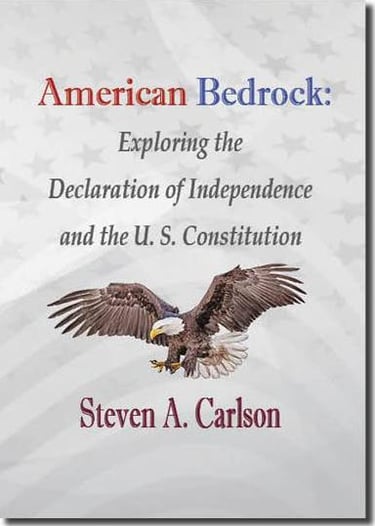
This book will truly enhance your understanding of the Declaration of Independence and the United States Constitution. Click the button below to check it out.
___________________________________________________________________________________________________________________________________________________________________________________________________
Feel free to visit restoretheword.com
Contact
Questions? Reach out anytime.
Email:
contact@constitutionmatters.net
© 2025. All rights reserved.