Does the Press Have a "Right" to a White House Pass?
Is limiting access a constitutional violation?
Steven A Steven
9 min read

To see a list of all commentaries, click the above picture.


American Naiveté About Communism


Executive Orders, Mail-in Ballots, and the Constitution


Unveiling the DSA Game Plan - Part 1
Unveiling the DSA Game Plan - Part 2


Granting Press Access
The issuance of press passes by the White House has been a long-standing component in the relationship between the government, the media, and the public. This process is intended to serve as a demonstration of an administration's commitment to transparency. However, the White House, as the hub of the executive branch, is tasked with protecting the nation's critical secrets and managing national interests while, at the same time, keeping the public informed concerning government activities. The goal is always to permit press access in a manner that strikes a balance between these competing aspects of governance.
Typically, the White House Press Office is responsible for overseeing the granting of press credentials. The criteria for obtaining a press pass involve a stringent verification process, adherence to professional ethics, and a demonstrated history of responsible reporting. These measures are purportedly designed to support a reputable press corps and to maintain the integrity of information disseminated to the public. Naturally, the White House faces serious challenges when navigating the complexities of press access, seeking to provide the citizenry with both transparency and security.
Challenges and Controversies Surrounding Press Passes
The allocation of White House press passes has long been a contentious issue, often involving allegations of bias and favoritism. The privilege of reporting from the nation's highest office is expected to be distributed fairly; however, the reality often reflects political leanings and relationships rather than objective criteria. Accusations arise when it appears that access is granted based on favorable coverage or punitive measures taken against certain journalists.
One of the recurring themes in the controversy surrounding press passes is the politicization of press access. Government administrators sometimes wield the power to grant or revoke press passes as a method of influence over media narratives. High-profile cases have surfaced where journalists reported an obstruction of their ability to access information. It has been suggested by some that instances where access has been denied or revoked raises concerns over governmental transparency. For example, there have been times when, for various reasons - some involving national security - specific reporters were removed from press briefings altogether.
It is often argued that when press passes are allocated based on subjective (often political) measures, it jeopardizes the representation of diverse viewpoints critical for a functioning republic. The tension between protecting national security and ensuring an informed citizenry continues to fuel discussions on how press access should be structured and governed. Hence, the controversies surrounding press pass allocation are reflective of broader issues regarding the ethical responsibilities of the press, as well as the obligations of government entities to provide information to the public.
The Legal Framework of Press Passes
On September 18, 2026, the Trump administration revoked White House press passes for certain news outlets who, it may fairly be said, have often challenged the boundaries of honest reporting, at times crossing the line into what could only be described as blatantly false reporting (misinformation) or, as the president likes to call it - fake news. Naturally, the news outlets have sued the administration over this decision, which is to be expected. This begs the question, raised in the title of this article: Does the press have a right to a White House pass?
As much as some may like to argue the point, there is no constitutional right to a White House pass. No such right can be found within the four corners of the Constitution. The First Amendment assures the press the right to report news without governmental interference. However, there is a Grand Canyon-sized gap between an organization's right to report and any purported right to access the White House or any other public or private organization. No such right is established in the U.S. Constitution.
It is clear that no press outlet has a constitutional right to a White House pass. It is also true the no press outlet has a statutory right to a White House pass. That is to say, Congress has passed no law guaranteeing any news outlet or member of the press internal access to the White House or White House personnel.
While the press has no constitutional or statutory right to access, the Constitution and the laws are not really at issue in this case. Although, to a degree, court authority may be at issue. On Thursday, September 24, 2026, U.S. District Judge Timothy Kelly issued a 14-day temporary restraining order against the Trump administration, insisting that the White House reinstate those press passes. In doing so, the judge cited cases of precedent including Winter v. Nat. Res. Def. Council, Dillinger v. Bessent, Ky Dept. of Corr v. Thompson, Sherrill v. Knight, and Karen v. Trump.
The press outlets argued, and the judge agreed, that they had a vested interest in White House passes equivalent to the "liberty or property" interest delineated in the Fifth Amendment. That amendment reads as follows.
It is difficult to determine why any judge would equate a White House press pass with the liberty and property delineated in this amendment since this particular constitutional construct is directed toward personal liberty and property. In other words, it references individual, not organizational rights. It is also difficult to understand how a reporter has the same vested interest in a White House pass as any citizen might have in his/her own "life, liberty, and property." Yet, the plaintiff made the claim, and the judge concurred partly on the grounds of the Fifth Amendment due process clause. This was based on an arguably flawed judicial decision in Sherrill v. Knight (1977) that such interest was, indeed, equivalent to a person's liberty as depicted in the Fifth Amendment.
Separation of Powers
A White House press pass is a valuable tool members of the press employ that allows them to gather information from governmental sources. Yet the Constitution does not guarantee that this tool must be made available to the press. While members of the press attempt to rely on the First Amendment, that same amendment guarantees the right of people to worship as they see fit, but falls short of guaranteeing a tool (building) to accommodate that worship. This case does, however, raise questions concerning separation of powers. Should the court be in the position to order the White House to allow specific individuals access via White House passes? For that matter, should the courts be in a position to force the administration to allow certain reporters access to Air Force One?
If a court decision is based on the administration breaking its own rules, it is reasonable to expect the court to seek to restore application of those rules, as if breaking a contract. However, invoking the Fifth Amendment seems to constitute overreach, with the court attempting to operate the executive branch. It would be the equivalent of the executive branch ordering the Supreme Court to hear a specific case that the Court had already declined. Who would not believe that to be a bridge too far? In fact, there is a strong case to be made that the court assigning equality between a White House press pass and an individual's Fifth Amendment liberty/property rights is a matter of the courts forging laws - a responsibility the Constitution specifically delegates to Congress in Article I.
When it comes to the internal processes of one of the three branches of government, it is reasonable to insist that the other two branches stay in their lane. While the court may reasonably insist that the administration follow its own rules, it seems quite the stretch to invoke the Fifth Amendment with respect to a White House press pass. Here's something to consider, although no one should take this as an attempt to influence administrative action. It should be seen merely as a query. If the White House ordered the court to hear a particular case, that order would be ignored. Why? It would be ignored precisely due to the constitutional principle of separation of powers. In the current case, it could be argued by the administration that the restraining order is inapplicable for the same reason since press passes to the White House are, indeed, an internal matter of the executive branch.
Although members of the press have no right to White House access, it has long been recognized by those in positions of authority that in a republic like the United States, the citizenry (voters) have a reasonable expectation of governmental transparency and, since that transparency is made possible through freedom of the press, allowing the press a measure of access is both responsible and wise. Still, it is also reasonable to conclude that this access is not without certain restrictions and is subject to a degree of executive branch discretion.
Some, of course, have voiced concerns that if a White House can simply deny passes to certain reporters or news outlets, this would open the floodgates, and ensuing presidents might do the same - expelling those whose reporting is considered unfavorable to the administration. While that may be true, it seems this would fall into the category of an executive decision by the party elected by the people. It should not be considered a legal/court matter. It seems more like a political matter and executive branch prerogative.
What is ironic is that not so long ago, certain political commentators at CNN - a network that lost White House passes last week - voiced their opinions on air that perhaps Fox News should be stripped of White House press passes because those commentators at CNN did not appreciate the reporting coming from Fox.
There is a strong case that the White House should not have revoked those passes in this particular manner. In fact, it is true that due process assurance was not met in this case - not due process as seen through the lens of the Fifth Amendment, but through the lens of self-imposed White House rules regarding press passes. According to the White House credentialing system, no such pass may be revoked without due process. Consequently, the court was right in issuing a temporary restraining order on that basis. Had the White House followed the rules, so to speak, these news outlets would have a much weaker case.
Press Access in the Digital Age
It could easily and legitimately be argued that the value of a White House press pass has depreciated, particularly in the last couple of decades. In 2026 it is arguably more of a status symbol than a measure of merit. With the digital technology that is available in this day and age, it seems a White House Press Secretary could easily offer a press conference including hundreds, if not thousands of people, at the click of a button. Additionally, the digital age has provided the opportunity for many lay reporters to attract the attention of thousands, hundreds of thousands, and even millions of listeners/viewers online.
As the world moves further into the digital age, the landscape of media and communication continues to mature. This shift not only transforms how news is produced and consumed but also affects traditional press rights, including access to significant governmental institutions such as the White House. The rise of digital platforms enables a broader array of voices to contribute to public discourse, creating opportunities for innovative forms of journalism that challenge conventional norms.
Alternative forms of journalism, such as citizen journalism and independent media, have gained prominence of late. These forms represent a shift away from mainstream press models historically considered the gatekeepers of information. Although, it is also fair to say that more voices providing information to the public lessens the influence any one source will have over the news narrative, which is a good thing. Perhaps, given this new landscape, the day will come when a White House press pass simply becomes a relic of days gone by.
No person shall be held to answer for a capital, or otherwise infamous crime, unless on a presentment or indictment of a grand jury, except in cases arising in the land or naval forces, or in the militia, when in actual service in time of war or public danger; nor shall any person be subject for the same offense to be twice put in jeopardy of life or limb; nor shall be compelled in any criminal case to be a witness against himself, nor be deprived of life, liberty, or property, without due process of law; nor shall private property be taken for public use, without just compensation.
------------------------------------------------------------------------------If you enjoyed this article, please encourage your friends to visit us here at constitutionmatters.net where the Constitution really does matter. Also, if you appreciate the articles and insights provided here, feel free to contribute to the cause by clicking below.
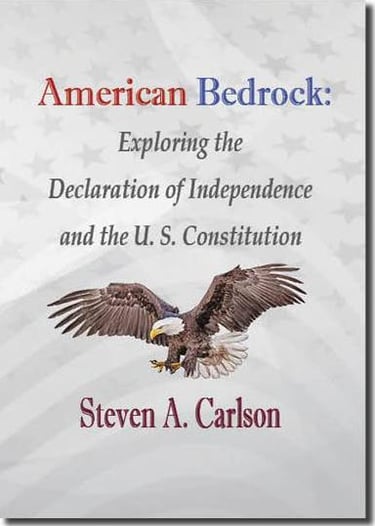
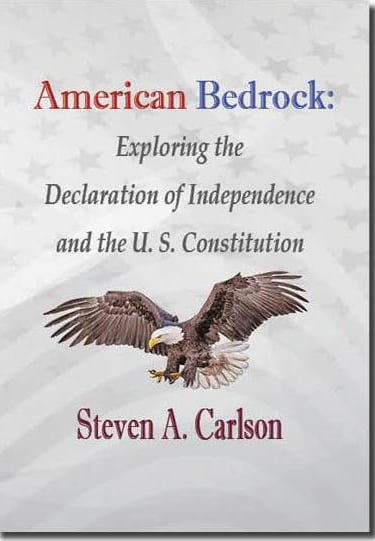
This book will truly enhance your understanding of the Declaration of Independence and the United States Constitution. Click the button below to check it out.


Contact
Questions? Reach out anytime.
Email:
contact@constitutionmatters.net
© 2025. All rights reserved.