SCOTUS: Revisiting Birthright Citizenship
Seeking Constitutional Wisdom from a Wayward Court
Steven A. Carlson
7 min read

To see a list of all commentaries, click the above picture.

The Rise of Populism in America - A House Divided
Democratic Socialism v the U.S. Constitution

Congress's Duty to Rein in Democratic Socialism
Abortion and the U.S. Constitution


The Citizenship Clause
On June 30, 2026, The U.S. Supreme Court handed down a ruling in Trump v. Barbara. The ruling stated that, with almost no exceptions, any child born on United States soil must be considered a citizen of the United States based on the birthright citizenship clause found in Section 1 of the 14th Amendment to the U.S. Constitution. That clause states:
All persons born or naturalized in the United States and subject to the jurisdiction thereof, are citizens of the United States and of the State wherein they reside.
In April and May, a six-part series was posted on this website addressing this predictable ruling from the Court and the multitude of constitutional flaws in that ruling (See Birthright Citizenship and a Typhlotic Courtroom: Lessons 1-6). You are encouraged to review those articles. Those constitutional flaws remain unchanged. However, we now have not only a constitutionally flawed Court ruling, but we are beginning to experience the sad consequences of that decision. Companies and hospitals are now openly advertising for foreigners to come to the U.S. to give birth with the sole purpose of establishing U.S. citizenship. Certainly, prior to the decision, people were entering the country for that purpose, but it was never so boldly promoted.
The citizenship clause establishes two criteria for birthright citizenship. The first is that a person must be “born or naturalized in the United States.” The second condition states that such person must be “subject to the jurisdiction” of the United States. According to the ruling, the thrust of the argument is that, with the rarest of exceptions, being subject to jurisdiction means being subject to the governmental oversight and/or laws of the United States. As clarified in the six-part series mentioned above, this was not the intent of the 14th Amendment. If that was the intent, there would be no need for the condition, “subject to the jurisdiction” since everyone in the U.S. (other than the commonly recognized limited status of foreign diplomats) is fully subject to its laws. Consequently, the second portion of the clause would be meaningless and unnecessary.
The Court's Blatant Disregard for Citizenship
The Supreme Court's decision in Trump v Barbara serves as a true embarrassment for the United States. Mollie Hemingway of the Federalist was correct when she stated that this Supreme Court decision was on par with other historically woeful rulings like Dred Scott (1857) and Roe v Wade (1973). In the majority decision, the court wrongfully relied on British Common Law that was in effect in the British colonial settlements of the 17th century. However, British Common Law no longer applied in America once the U.S. Constitution along with various citizenship laws were instituted. Additionally, the authors/sponsors of the 14th Amendment clarified that "subject to the jurisdiction" was a separate issue from being subject to laws. That distinction will not be reiterated here since those details are expressed fully in the six-part series mentioned above. Suffice it to say that the justices failed in their duty to consider fully the context of the writing of the 14th Amendment and, in doing so, signed what might be seen as a suicide pact for the sovereignty of the United States of America.
Technically, the Court was correct in striking down Trump's executive order since the topic arguably exceeds the legitimate scope of an executive order. However, the Court was still wrong in upholding birthright citizenship for the children of illegal aliens, and it is sad that the majority failed to do their homework where the 14th Amendment is concerned. The Naturalization Act of 1802 and the Slaughterhouse cases of 1873 clearly marked the path for the Court to follow; nor does the case of Wong Kim Ark in 1898 set a good-faith precedent for the birthright citizenship of the children of illegals since this was not the issue addressed in that case. These points were well-voiced in the dissenting opinions by Justices Thomas, Alito, and Gorsuch. Unfortunately, the majority, whether intentionally or ignorantly, failed to give that history due consideration.
It is expected that the three liberal justices on the Court will generally rule in keeping with the Democrat political perspective. Their rulings, after all, are driven, not by the Constitution, but by a liberal agenda. On the other hand, Chief Justice John Roberts has been historically weak when it comes to applying original intent where the U.S. Constitution is concerned. Justice Amy Coney-Barret, and perhaps to a lesser degree, Justice Bret Kavanagh have also proven to be constitutional disappointments.
Since the release of the Court’s ruling, some believe that President Trump might ask the Court to reconsider their decision on birthright citizenship as the inevitable consequence of that decision has begun to rear its ugly head. In their ruling, the justices completely disrespected, devalued, and even injured the worth of U.S. citizenship, a result that is light years removed from the intent of the 14th Amendment. If anything, this amendment was written to accentuate that value as citizenship was awarded to former slaves and their descendants.
Over the past few decades, the 14th Amendment has been used by other nations to politically undermine the U.S. by establishing birthright citizenship for children who will never hold allegiance to this country. China, in particular, has abused this opportunity. The Monroe Doctrine, articulated by President James Monroe in 1823, forbade other nations from interfering with nations in the western hemisphere. By establishing birthright citizenship for children who will be raised in other countries under regimes antagonistic to liberty, children of other nations and other beliefs are now able to vote in our elections and, one day, will even be eligible to run for president of the United States. This is the method by which other nations are able to thwart the principles of the Monroe Doctrine and invade this nation politically. This is the philosophy the Supreme Court just condoned. It can be stated unequivocally that the people of 1868 had no intention of opening that door when they ratified this amendment, so it cannot be argued that the ruling of the Court is in keeping with original intent.
Constitutional Options
Is it possible that the Court might review and reverse its ruling on birthright citizenship? The odds are heavily against it since it takes four justices to agree to revisit the case. While Bret Kavanagh may reverse course and agree to a hearing, Roberts and Coney-Barret likely will not change their positions, which still leaves the court with a 5-4 decision upholding birthright citizenship for the children of illegal aliens. It seems decisions as significant as birthright citizenship cannot be trusted to a Supreme Court that has, for nearly a century, failed to consistently uphold the Constitution. This leaves it up to Congress to act. Congress must derive a legislative plan to counter the Court’s decision. Apparently, a potential constitutional amendment has been drafted in an effort to address birthright citizenship. However, an amendment faces a monumental uphill climb as it requires 2/3 of congressional support and ratification by 38 states. It is difficult to picture 2/3 of Congress and 38 states agreeing to anything given the current political climate.
There is, of course, an option to bypass Congress and the courts, but it is, for all practical purposes, as difficult as the standard amendment process mentioned above. This would involve assembling a constitutional convention where an amendment could be proposed and it would only require participation by 2/3 of the states (34 states) according to Article V of the Constitution. However, it is doubtful that 34 states would agree to a constitutional convention at this time, much less agree on the language for a new constitutional amendment. Additionally, opening the Constitution to a constitutional convention would likely make the debates of 1787 look like child's play and could lead to even greater division. Still, it is an option.
It is possible that Congress could pass legislation to counter the Court’s decision. Oddly enough, the Court seemed to provide such an opening in their ruling. However, in order to pass any legislation addressing birthright citizenship, the Senate would need to eliminate the filibuster, and Republicans have already shown that they do not have the political fortitude to do what must be done. Consequently, for the time being, it seems we are stuck with allowing other nations to undermine our sovereignty until someone other than Donald Trump has the mettle to stand up for the U.S. citizenry.
------------------------------------------------------------------------------If you enjoyed this article, please encourage your friends to visit us here at constitutionmatters.net where the Constitution really does matter. Also, if you appreciate the articles and insights provided here, feel free to contribute to the cause by clicking below.
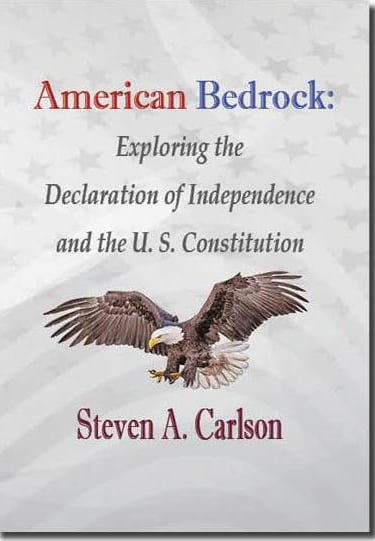
This book will truly enhance your understanding of the Declaration of Independence and the United States Constitution. Click the button below to check it out.
___________________________________________________________________________________________________________________________________________________________________________________________________


Feel free to visit restoretheword.com
Contact
Questions? Reach out anytime.
Email:
contact@constitutionmatters.net
© 2025. All rights reserved.