Democratic Socialism v the U.S. Constitution
Two Incompatible Philosophies
Steven A. Carlson
4 min read

To see a list of all commentaries, click the above picture.
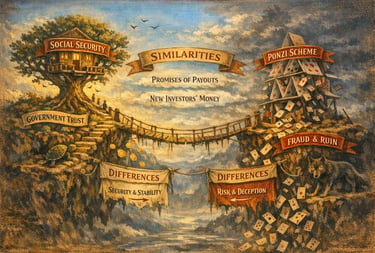

Is Social Security a Ponzi Scheme?


Insights into the Declaration of Independence
Wolf in Sheep's Clothing
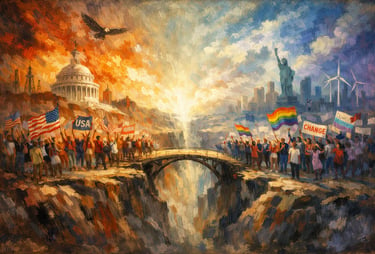
The Rise of Populism in America - A House Divided
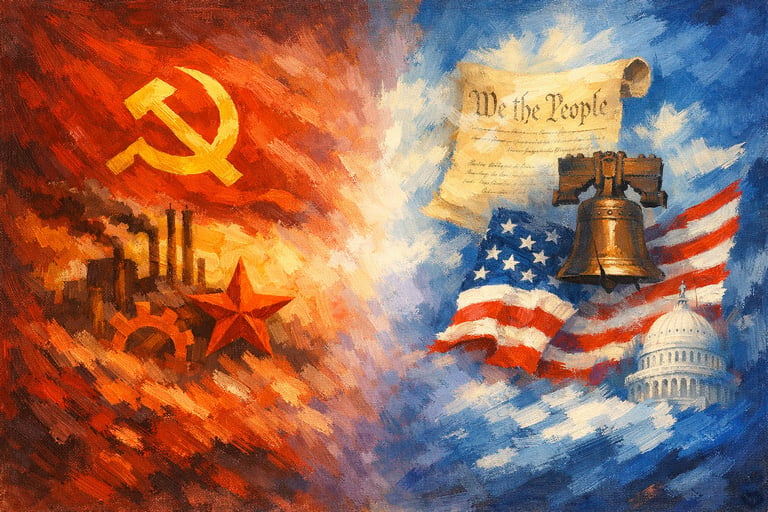
Democratic Socialism Measured Against the U.S. Constitution
The discourse around what is called Democratic Socialism in America has gained momentum in recent years, driven by a movement leaning towards more progressive policies. As discussions about social equity and access to basic needs take center stage, the tension between Democratic Socialism and the U.S. Constitution invites critical examination. Democratic Socialism is a term that has only surfaced over the last couple of decades, introduced by people like Senator Bernie Sanders of Vermont. In fact, it was not that long ago that any suggestion of socialist ideas in America would be drowned out with loud accusations of Communism.
As a concept, Democratic Socialism purportedly seeks to combine the principles of democracy with socialist ideals, advocating for political democracy alongside social ownership of the means of production. This ideological framework presents a unique yet contentious juxtaposition with the foundational principles enshrined in the U.S. Constitution. To evaluate Democratic Socialism against the U.S. Constitution, it is vital to establish a clear understanding of both constructs. The U.S. Constitution, ratified in 1788, serves as the framework for U.S. governance, protecting the rights and liberties of individuals through its Bill of Rights. Key principles within the Constitution include individual liberties, checks and balances, and the separation of powers, all of which were designed to prevent the concentration of power that could lead to tyranny. In contrast, Democratic Socialism posits that the government has a responsibility to ensure equality of opportunity (more accurately, equality of outcomes) and access to basic services such as healthcare, education, and housing. Advocates argue that these provisions create a more equitable society. Critics of Democratic Socialism express concerns that such government intervention inevitably infringes on individual liberties and market freedoms, which are foundational principles of the U.S. Constitution.
One primary contention of Democratic Socialism is its emphasis on social welfare programs. It is argued that Articles in the Constitution that promote the general welfare, particularly through the Preamble, can be interpreted to support government involvement in economic distributions aimed at reducing inequality. However, opponents argue that extensive government control over economic resources is contrary to the Constitution's principles of free enterprise and individual freedom. Another area of consideration is the First Amendment, which protects freedoms concerning religion, expression, assembly, and the right to petition. Democratic Socialism's advocacy for collective representation can be perceived as infringing upon these rights, particularly if state-sponsored initiatives limit individual expression or economic agency.
The greatest disparity in the divide between Democratic Socialism and the U.S. Constitution is the primary focus of each philosophy. While Democratic Socialism focuses on the well-being of the collective, the Constitution presents individual rights and freedoms as its centerpiece. Additionally, the involvement of government in the economic sphere raises questions about the democratic process. In a Democratic Socialist framework, the state's active role in the economy and wealth redistribution is at odds with the Constitution’s ideals of minimal government interference in personal and economic decisions. The Fourteenth Amendment, granting equal protection to all, must be weighed against social programs that openly prioritize certain groups over others based on economic status.
Democratic Socialists argue that the Constitution was crafted with a flexible framework capable of adapting to the changing needs of society. The Constitution allows for amendments, which have historically enabled the expansion of rights and liberties to previously marginalized groups. By advocating social policies through a democratically elected process, supporters contend that Democratic Socialism not only aligns with but also fulfills the spirit of constitutional democracy. However, where this philosophy falters is the idea that Democratic Socialism could never align with the constitutional principle of individual freedoms. The two are directly in conflict.
Conclusion
In reality, the term Democratic Socialism is designed to camouflage the crux of the philosophy. The fact is that Democratic Socialism is Socialism, pure and simple. While many insist that Democratic Socialism and a constitutional republic can co-exist, the truth is they cannot. Indeed, the excessive involvement of government in the individual lives of Americans and its policies of wealth redistribution far exceed the founders' vision of America. The founders dreamt of a land where every individual could have the opportunity to accomplish great things, build a successful life for himself/herself, and hand that success down to his/her descendants. Socialism seeks only to strip the successful of what they have built. Consequently, conflicts between Socialism and constitutional principles are irreconcilable. This means one of two things will happen in the near future. Ultimately, either Socialism will win the day, or the constitutional principles of individual rights and freedoms will prevail. There are no other options.
------------------------------------------------------------------------------If you enjoyed this article, please encourage your friends to visit us here at constitutionmatters.net where the Constitution really does matter. Also, if you appreciate the articles and insights provided here, feel free to contribute to the cause by clicking below.
This book will truly enhance your understanding of the Declaration of Independence and the United States Constitution. Click the button below to check it out.
___________________________________________________________________________________________________________________________________________________________________________________________________

Feel free to visit restoretheword.com
Contact
Questions? Reach out anytime.
Email:
contact@constitutionmatters.net
© 2025. All rights reserved.