Democratic Socialism: The Agenda
A Communist Manifesto designed for America
Steven A. Carlson
7 min read


To see a list of all commentaries, click the above picture.


Democratic Socialism v the U.S. Constitution
Congress's Duty to Rein in Democratic Socialism


Abortion and the U.S. Constitution



SCOTUS: Revisiting Birthright Citizenship
Defining Democracy
No one should confuse a constitutional republic with democracy. Politicians often speak of the United States in terms of democracy. However, the truth is that this is a constitutional republic that is built on democratic principles. In a democracy every citizen votes equally on every decision facing the nation. This means that every decision faced by Congress, whether laws, treaties, etc., would necessarily go before the citizenry for a popular vote – a process that would be more than burdensome.
One of the issues with a pure democracy is that the majority always rules. This can have dangerous consequences, much like a pack of wolves and one sheep voting to decide what to eat for lunch. Consequently, in this constitutional republic, we select representatives who purportedly share our values and perspectives to decide issues on behalf of the citizenry. Exactly what are the democratic principles upon which this nation was founded? They include, but are not limited to:
1. Citizen participation – The people have a voice in shaping government and policy. In a democracy, public participation is direct (e.g., referendums, town meetings) while, in a constitutional republic, the input is indirect as participation is indirect (e.g., voting for representatives). Still, individuals can avail themselves of opportunities for direct participation through public debate, peaceful protest, and engagement with civil society.
2. Equality – This is the democratic principle that each individual should have equal societal footing both legally and economically.
3. Liberty and Rights – A democracy is designed to protect fundamental rights and freedoms such as those designated in the Bill of Rights.
4. Rule of Law – In a democracy, the legal principle is that the laws of the land apply equally to each individual.
5. Media Independence – A democracy allows for freedom of the press so that powerful, influential individuals cannot control the information that is released to the public.
6. Economic Freedom – Citizens are allowed to seek financial gain within the confines of the law.
7. Autonomy – Individuals have control over how they wish to live their lives without undue interference by others.
These are some of the basic democratic principles upon which the United States was founded in the late 18th century. However, these have been tweaked as necessary to adapt to the landscape of a constitutional republic. For instance, separation of powers (checks and balances) in the government is intended to protect the rights of individuals from a runaway government. Additionally, elections are held as a matter of holding government officials accountable to the people.
Democratic Socialism Communism in America
In the United States, a movement calling itself Democratic Socialism has taken a slight foothold in American politics. Despite the deceptive name, no one should confuse Democratic Socialism with democracy. The two are polar opposites. This has become even more evident in recent days with the unveiling of the movement’s specific political agenda. The details of that agenda reveal a plan steering the movement directly in the path of the U.S. Constitution where there is sure to be a collision of fierce magnitude.
In the second half of the 19th century, a German revolutionary by the name of Karl Marx laid the groundwork for the communist movement. In 1867 he, along with a man by the name of Freidrich Engels, published The Communist Manifesto in which they laid out the fundamental concept of communism as an alternative to capitalism. The term capitalism was meant as a pejorative to mock the idea of a free market system. The communist philosophy of entitlement soon drew many disciples, even in America, as people came to believe government should serve as a provider rather than a facilitator with a limited role.
In the early 20th century, Vladmir Lenin, a Russian, built upon the ideas of Marxism, adapting those ideas to the specific conditions of Russian society. Other nations, having seen Lenin's conversion of Russia, began applying those same principles. In the throes of the Great Depression in the 1930's, President Franklin Roosevelt believed a limited dose of Marxism could help provide a measure of economic relief in America. This led to the introduction of the New Deal in the mid-1930's and the rise of socialist federal programs in the United States.
Under the guise of the slogan “Workers Deserve More,” one of the stated goals of the modern Democratic Socialists of America (DSA) is to eliminate the U.S. Senate. The claim is that the design of the Senate is antithetical to democracy itself since the primary premise where democracy is concerned is equal representation for each individual – not equal representation for states. While the House of Representatives upholds that principle, the Senate is designed to represent each state equally, regardless of population. This bicameral design for the legislature, established in Article I of the U.S. Constitution, provides the framework for a constitutional republic – not a democracy. Each state’s population is represented proportionately in the House of Representatives while each state receives equal representation in the Senate. This gives states with smaller populations the opportunity to influence governmental decisions.
The DSA seeks to establish the current House of Representatives as the single federal congressional authority and would replace the president and the Supreme Court with an executive and judiciary appointed by and subordinate to Congress. Additionally, the current free market economy would be replaced with governmental ownership and control of corporations. Major forms of transportation, energy infrastructure, and all natural resources would fall under the ownership and control of the government.
There are a few other morsels on the DSA agenda. For instance, the DSA calls for amnesty for all immigrants living in the United States, guarantee of every basic need (food, shelter, etc.) for each individual in the country, a 32-hour work week with no reduction in pay, and higher taxes on the wealthy, including a wealth tax. The movement also calls for Medicare for all with no premiums, co-pays, or deductibles. Where housing is concerned, the plan is to have universal rent control and taxpayer-funded housing.
Some other items that will likely meet with considerable approval by many include free childcare, tuition-free public colleges with no out-of-pocket costs for room and board, and cancellation of all student debt. In addition, the plan calls for free migration between countries, an end to all deportations, and voting rights for non-citizens. The Department of War would be shut down and cash bail for law breakers would be eliminated. While the plan includes many other perks, these are sufficient to give readers an idea of what the DSA would like to see in America.
Sadly enough, for the millions of citizens (and non-citizens, for that matter) who have chosen to place members of the Democrat Party in office over the past few decades, these are the items for which you (perhaps unknowingly) have been voting, albeit it at a much slower pace. For the past century, these kinds of agenda items have been the ultimate objective for the Democrat Party. Since FDR's presidency in the 1930's, Democrats have sought, ever so delicately, to forge a United States government that resembles other socialist/communist states. However, the plan has been to redirect the nation ever so gently so that the leftward shift would go unnoticed. Unfortunately for the Democrat Party, Democratic Socialists are not quite so patient and, as such, have forced the Democrat agenda into the open.
While many of these proposals may sound appealing, it is important to remember that nothing is free. There is always a price to be paid. The primary focus in communism is what is called social harmony at the cost of personal freedoms. Indeed, in The Communist Manifesto, the words social, socialism, socialist appear hundreds of times. That is because the focus in communism is on the collective, a term used liberally by the DSA. In contrast, the U.S. Constitution focuses on individual rights and freedom. For this reason, the word right appears numerous times, particularly in the amendments to the Constitution. However, the words social, socialism, socialist, communism, and collective, appear nowhere in the U.S. Constitution.
For those who wonder how the DSA plans to accomplish these agenda items, their methods have not yet been revealed. Since things like the Senate, presidency, and Supreme Court are established in a ratified Constitution, it would be necessary to alter the Constitution dramatically or completely remove it as the country’s foundational document, which would be a formidable task in itself. The initial goal would obviously be to win the necessary congressional seats in both the federal and state governments to accomplish these goals. However, since that is unlikely to happen, it is doubtful that such changes could ever be made peacefully, which means it could only be done by force. This is where the DSA would take on its true persona as a totalitarian communist state.
The Constitution, in Article IV, requires that a republican form of government be maintained at both the federal and state levels in the United States. Consequently, a movement toward socialism/communism is in direct conflict with the very fabric of that document. Since the attempt to reform the U.S. into a communist society is not possible, constitutionally speaking, and since the Democratic Socialists in this country are determined, the American citizenry would do well to prepare for the political battle that lies ahead.
------------------------------------------------------------------------------If you enjoyed this article, please encourage your friends to visit us here at constitutionmatters.net where the Constitution really does matter. Also, if you appreciate the articles and insights provided here, feel free to contribute to the cause by clicking below.
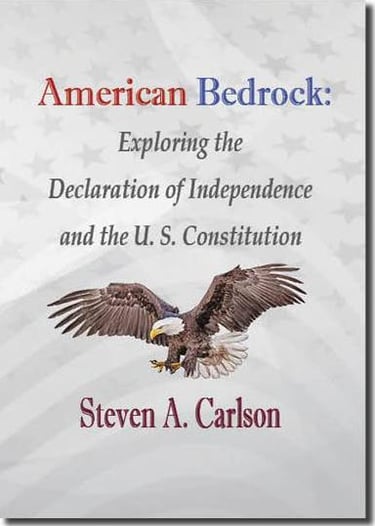
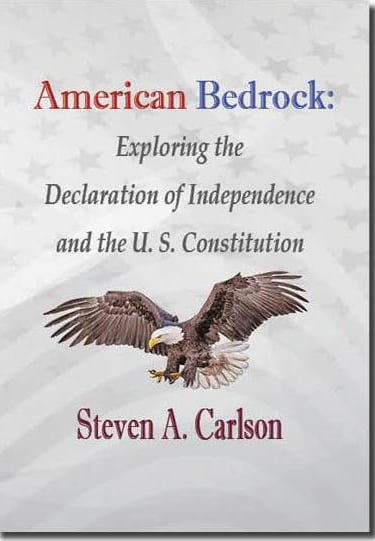
This book will truly enhance your understanding of the Declaration of Independence and the United States Constitution. Click the button below to check it out.
______________________________________________________________________________________________________________________________________________________________________________


Feel free to visit restoretheword.com
Contact
Questions? Reach out anytime.
Email:
contact@constitutionmatters.net
© 2025. All rights reserved.