July 4, 2026 - What We Are Celebrating
A rare opportunity for all Americans to celebrate our nation together.
Steven A. Carlson
5 min read

To see a list of all commentaries, click the above picture.
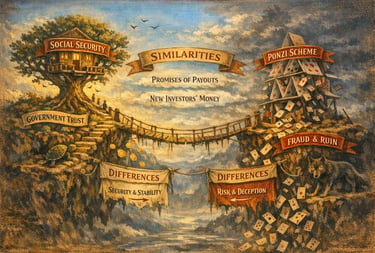
Is Social Security a Ponzi Scheme?


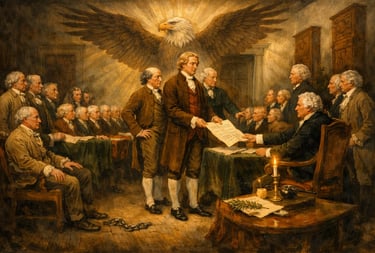
Insights into the Declaration of Independence
Wolf in Sheep's Clothing

Proposal for the 28th Amendment to the U.S. Constitution
The History of July 4th
On July 4, 1776, a group of delegates representing the thirteen American colonies formally adopted the Declaration of Independence. This pivotal event was the culmination of years of rising tensions between the colonies and Great Britain, fueled by a series of legislative and military confrontations that had deepened the rift over taxation, representation, and governance.
The dissatisfaction with British rule can be traced back to events such as the imposition of the Stamp Act in 1765 and the Townshend Acts in 1767, which incited protests in cities like Boston and Philadelphia. Figures such as Samuel Adams, a prominent advocate for colonial rights, began to rally colonists against what they considered oppressive measures.
The Boston Tea Party in 1773 was a significant act of defiance, where colonists protested the Tea Act by dumping tea into Boston Harbor. In response, the British government enacted the Coercive Acts, further alienating the colonies. Leaders like John Hancock and George Washington then began to emerge as crucial figures in the pursuit of independence.
By 1775, the situation exploded into open conflict, with the Battles of Lexington and Concord marking the beginning of the American Revolutionary War. The Continental Congress convened in Philadelphia, where delegates debated the merits of independence versus reconciliation. Thomas Paine’s pamphlet, "Common Sense," published in early 1776, galvanized public opinion in favor of breaking away from British rule.
On June 7, 1776, Richard Henry Lee of Virginia proposed a resolution for independence, which led to the formation of a committee to draft a formal declaration. This committee included influential figures such as Thomas Jefferson, John Adams, Benjamin Franklin, Roger Sherman, and Robert R. Livingston. Jefferson, known for his eloquence and philosophical insight, was tasked with drafting the document.
The drafting process involved intense debate and revisions. The document articulated the Enlightenment principles of liberty and natural rights, and it asserted the colonies' grievances against King George III, such as unfair taxation and the denial of representative government. The colonists saw these acts of Britain as usurpation of the right of the people to participate in decisions impacting the colonies. Jefferson’s draft underwent scrutiny from fellow committee members who suggested changes to improve clarity and impact.
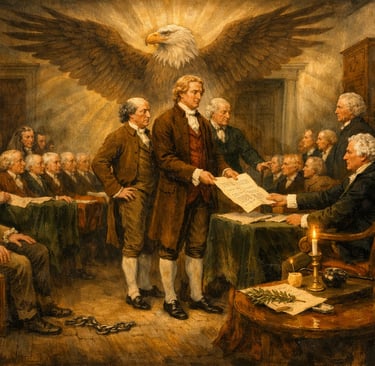
On July 2, the Continental Congress officially voted for independence, and on July 4, the final version of the Declaration was adopted in Philadelphia. The signing took place in the Pennsylvania State House, now known as Independence Hall. Notable signers included John Hancock, whose bold signature became iconic, as well as other founding fathers like Charles Carroll, Button Gwinnett, and George Clymer.
The Declaration served not only as a formal statement of the colonies' separation from Britain but also as a philosophical document promoting the idea that governments derive their power from the consent of the governed. It expressed the desire for freedom and established a foundation for the principles that would guide the new nation.
In the wake of the Declaration, the American Revolutionary War continued for several more years, with battles fought across the colonies. The commitment to independence rallied support among the colonists and their allies, leading to a victory against the British. The Declaration of Independence remains a symbol of freedom and is celebrated every year on Independence Day, a testament to the brave actions of those who fought for it.
What We Are Celebrating
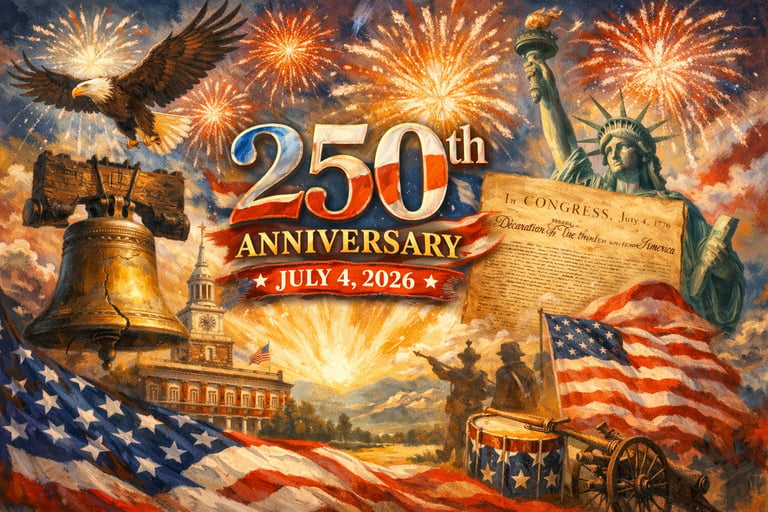
On July 4, 2026, citizens of the United States have much to celebrate. First, we are celebrating the birth of a nation. This was the moment, 250 years ago, when the founding fathers declared independence for the people of the United States. Second, we are celebrating the freedom to self-govern, exactly as the founders intended. Finally, we are honoring the sacrifices made on our behalf by those who forfeited much that we might be free, often sacrificing even their lives for the benefit of coming generations including those of us who live in the 21st century.
Celebrating the 250th anniversary of the Declaration of Independence is of paramount importance as it provides us with an opportunity to reflect on the values and principles that underpin our nation. The Declaration marked a pivotal moment in history, asserting the colonies’ desire for freedom and self-governance. This celebration not only recognizes the courage of those who fought for independence but also reinforces our commitment to the ideals of liberty, equality, and justice for all.
The 250th anniversary serves as a reminder of the sacrifices made by our forefathers. By commemorating this event, we honor the struggles and determination that led to the establishment of a government based on the consent of the governed. It is an opportunity to educate younger generations about the significance of freedom and independence along with the rights enshrined in our Constitution. Understanding our past equips us to better navigate present challenges and reinforces our responsibility to uphold these principles.
It is important to allow the celebration to foster unity among communities across the nation. The Declaration's ideals resonate with countless individuals seeking justice and freedom worldwide as nations watch in envy. By collectively acknowledging our shared history, we cultivate a greater sense of national identity and solidarity. While the issues that divide us are not insignificant, this seems like a perfect time to set aside those differences, at least for one day, and celebrate together the opportunities this nation has to offer. Events commemorating the anniversary can serve as platforms for dialogue about the ongoing challenges concerning life in America. In that vein, it is my true desire that everyone is able to share this moment together in a proud and joyful celebration of the founding of our country, and that each one would make the most of the opportunity to pursue their dreams through the bounty this nation has to offer.
------------------------------------------------------------------------------If you enjoyed this article, please encourage your friends to visit us here at constitutionmatters.net where the Constitution really does matter. Also, if you appreciate the articles and insights provided here, feel free to contribute to the cause by clicking below.
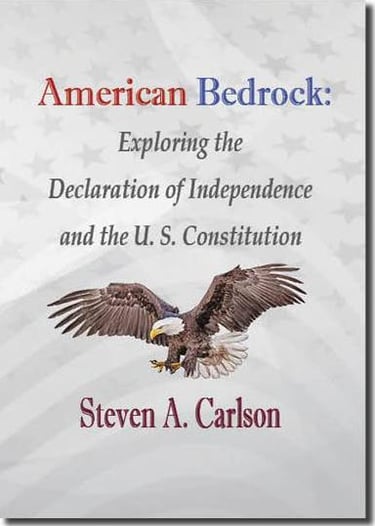
This book will truly enhance your understanding of the Declaration of Independence and the United States Constitution. Click the button below to check it out.
___________________________________________________________________________________________________________________________________________________________________________________________________


Feel free to visit restoretheword.com
Contact
Questions? Reach out anytime.
Email:
contact@constitutionmatters.net
© 2025. All rights reserved.